In pursuit of a global mindset
Photographs by JaQuan Alston; Illustrations by Mar Hernández
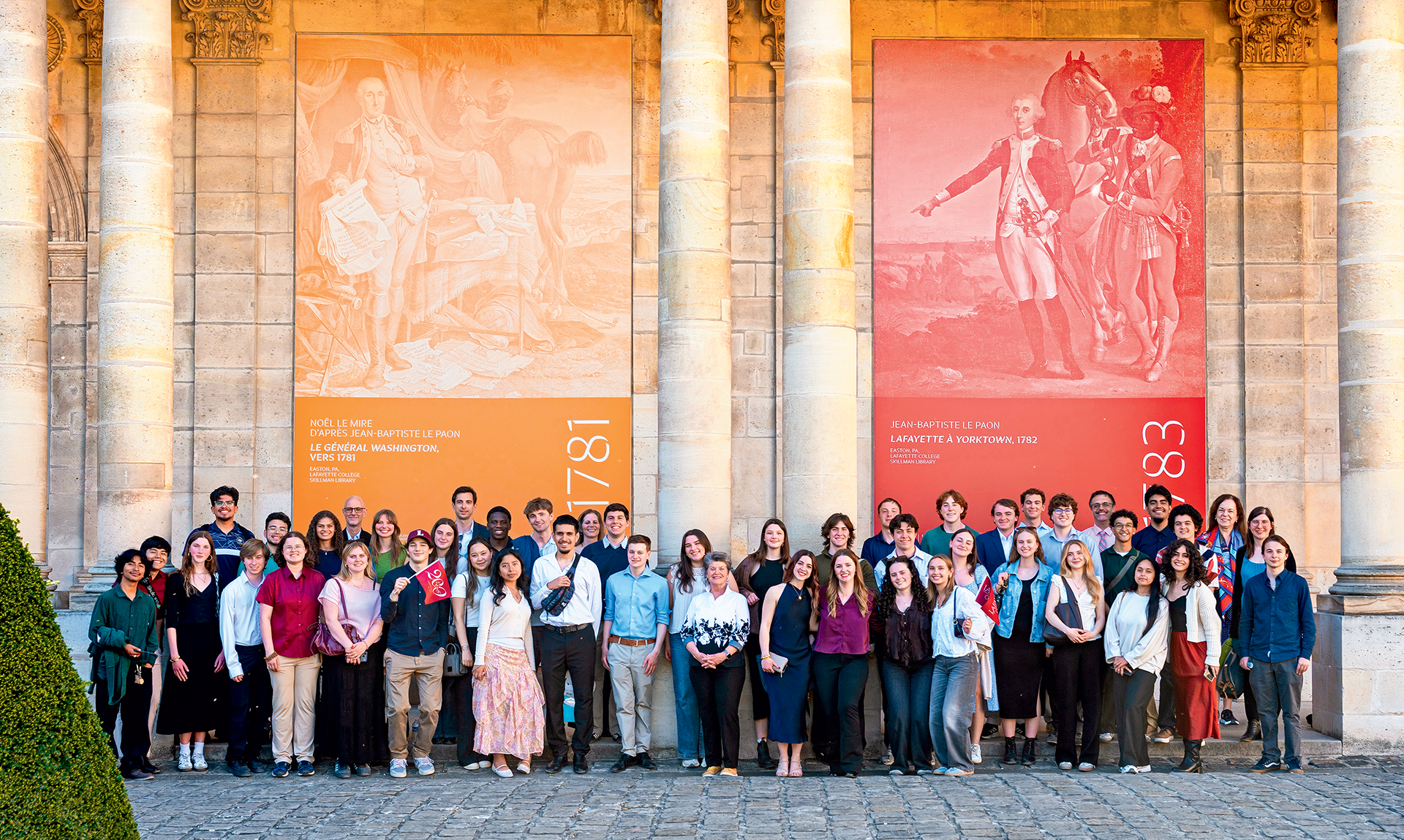
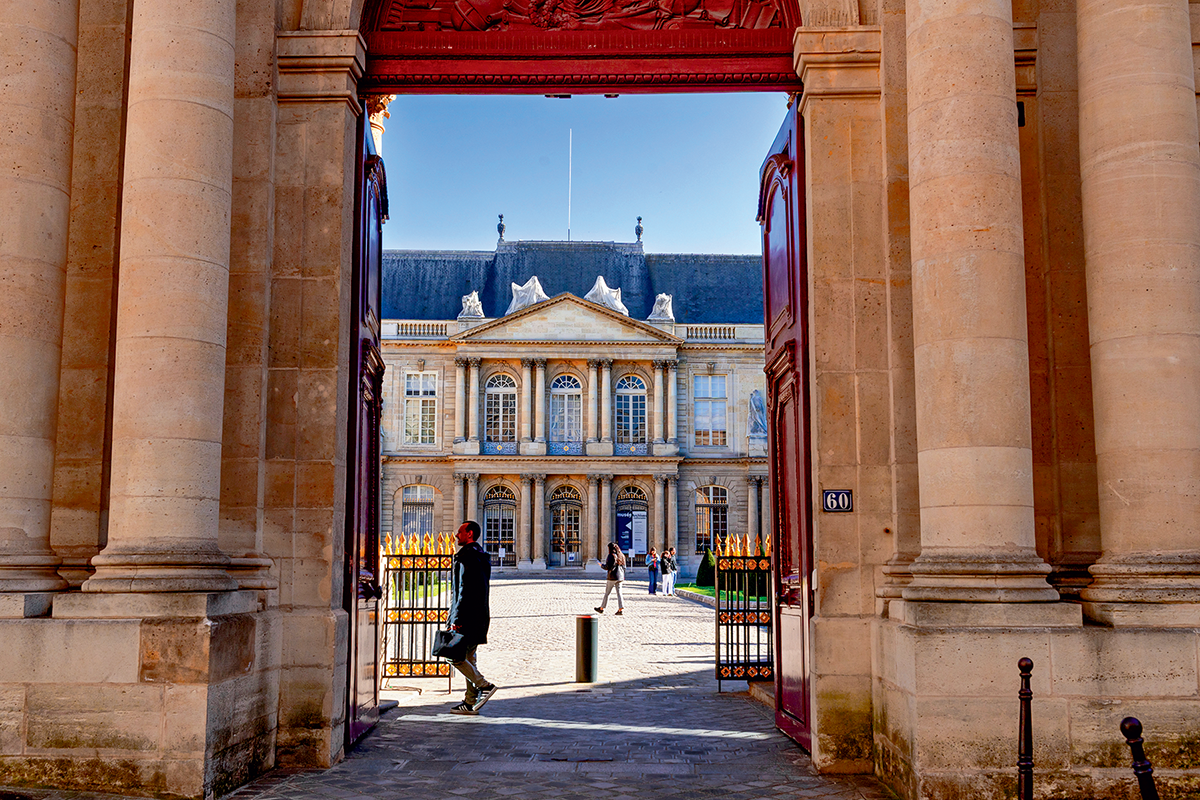
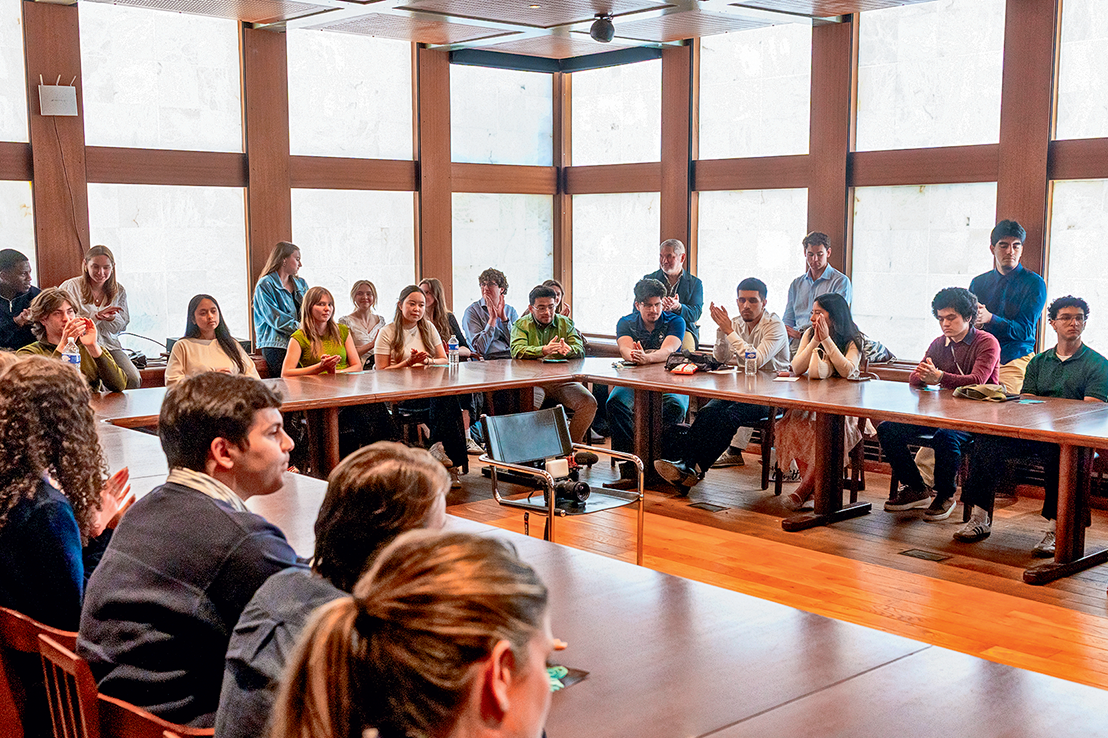
In April, 40 Lafayette students sat down with five alumni at the National Archives of France for a candid discussion about globalization.
The second-year engineering students were already studying abroad in Europe; half of the group arrived from Madrid with Michael Senra, associate professor of chemical and biomolecular engineering and chair of the dual degree program in engineering and international studies, while the other half traveled in from Bonn, Germany, with Hannah Stewart-Gambino, professor of international affairs and government and law. As their spring semesters in Europe were winding down,
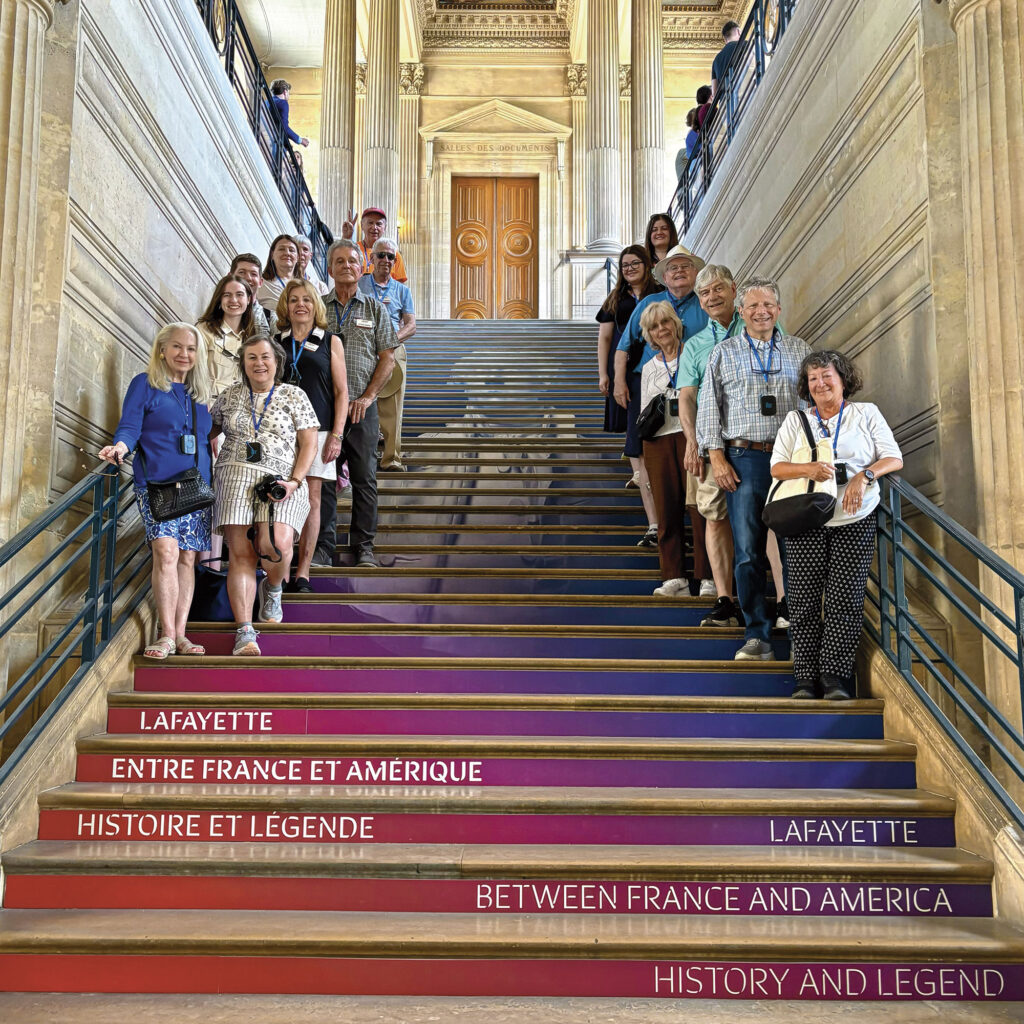
the students were offered an invitation to Paris for a special occasion: early access to the Lafayette Between France and America: History and Legend exhibition, of which the College loaned more than 50 artifacts and items. (Click here for more on the exhibition.)
The students took turns snaking through the five-room exhibition, learning about Lafayette’s legacy and impact on the American Revolution. They chatted about why the. Marquis de Lafayette was one of the first true global citizens—and what he might make of the world today, from modern political systems to the heightened interconnectivity of the world. (One student suggested that the Marquis would love the concept of social media.)
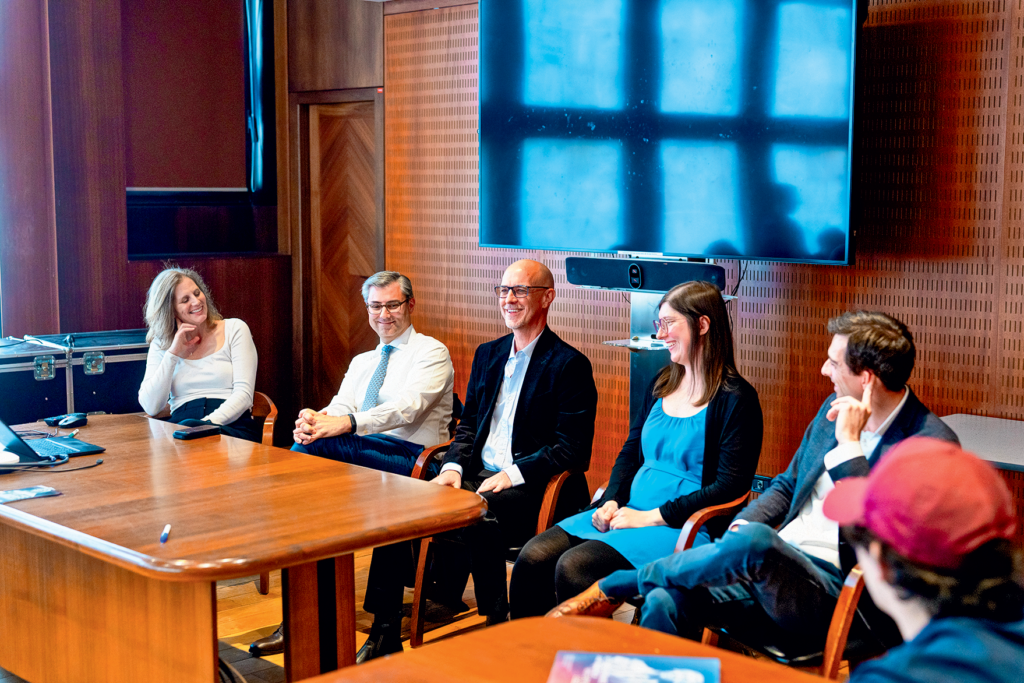
By the afternoon, the group walked across the museum’s courtyard and into a nearby conference room. Filing in quickly, they filled out the u-shaped table arrangement with an overflow of students perched along the windowsills. Sitting in chairs at the head of the room was the panel of alumni speakers: Linda Assante Carrasco ’90, Sebastian “Benny” Crapanzano ’97, P’26, Patrick Dieterich ’93, Alicia Clark ’11, and Gabriel Valentin ’02.
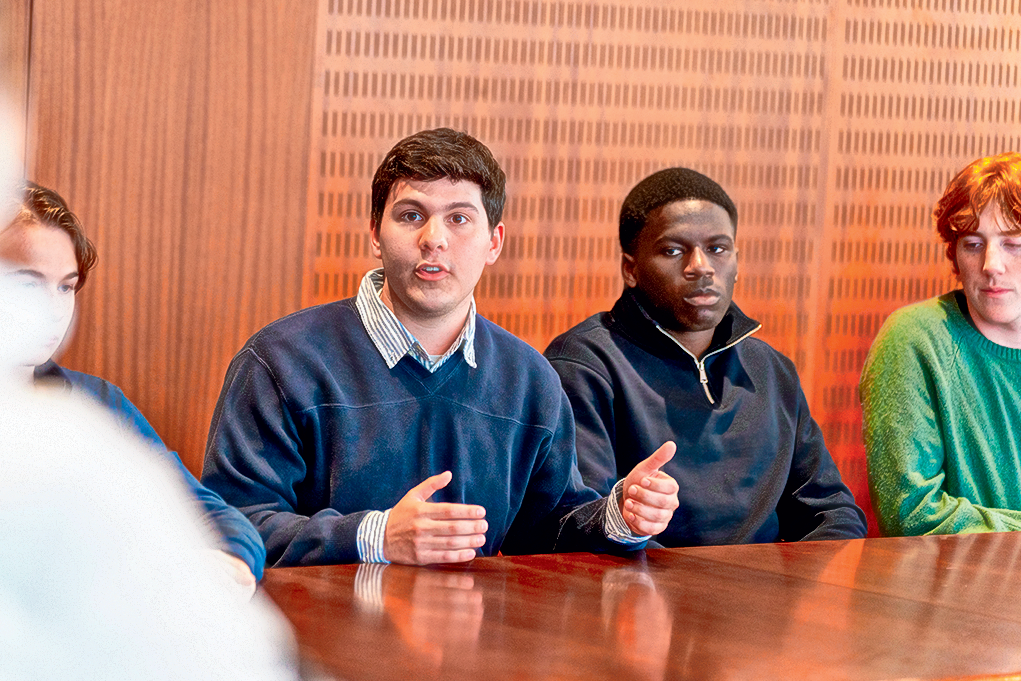
Before the discussion began, Reese Michaels ’28 thanked the alumni for coming. She and her peers in Bonn had been taking a course in globalization over the past few months, learning from Prof. Stewart-Gambino about global history and global systems through many lenses, including different cultures and political systems. “Through the readings and discussions, and our own personal travel, we’ve been able to see the impact of globalization, economically, politically, nationally, and just in day-to-day life,” Michaels said. “It’s been really interesting.”

Critical Thinking
Being able to objectively analyze and synthesize ideas is a pillar of the liberal arts education—and of globalization.
The group soon embarked on more introductions, followed by a considerate conversation, thousands of miles from campus, about the power and ripple effect of a globalized world, and what it might look like for any given person in any given business. The balance of the hour was dedicated to alumni answering some questions from students.
“Globalization is something that is crucially important for Lafayette graduates, whether they’re majoring in the languages, economics, or engineering,” Senra said. “This is work that a whole host of individuals on Lafayette’s campus are championing—having a global mindset.”
From offering career advice to unpacking nuances in their worldwide industries, here’s some of the best advice that was shared with students.
Soft skills empower you to work anywhere in the world.
At any given time, Crapanzano, managing director at Morgan Stanley, could be traveling to Paris, London, Tokyo, São Paulo, and beyond for business. (He happened to be working at the Paris office the day he met with students.) Driven by the surge in tech, he shared that the global finance industry in which he operates is more connected than ever before.
And when different languages present a barrier, soft skills can help to unlock some key messaging that would have been otherwise lost in translation. “You don’t necessarily have to know the language, but you need to pick up on cues and have vehicles to communicate,” said Crapanzano, noting that cultural immersion is the best and fastest way to do this.
Active listening, paying attention to body language, and being flexible are all mutually beneficial strengths. Focus on what’s being said just as much as how it’s being said.

Problem-Solving
“Do the work and be resourceful,” Linda Assante Carrasco said. “Always bring a solution to a problem.”
These were all habits that trilingual Valentin, who was born in France, practiced when he was a student at Lafayette in a time when there were few international students on campus. “Lafayette was my first introduction to globalization and understanding different cultures,” Valentin said. While on College Hill, he studied economics and business, and Spanish; after graduating in the early 2000s, he soon began his career in marketing, working for worldwide brands Colgate-Palmolive and Bacardi.
Leading global campaigns and teams, Valentin knows how to grasp various cultures in order to tailor—and successfully land—a specific product or messaging to different audiences. Although he’s been in Paris for more than 15 years, he’s also spent time living in Spain and London. “It’s about understanding local things to make it global, and vice versa,” Valentin said. “You cannot make something global if you don’t have any idea of how people live and their experiences.”
Moving up might mean moving.
Throughout the span of any career, a number of relocations, traveling roles, or positions in different cities will present themselves—and it’s important to entertain them.
Dieterich’s journey with globalization began immediately after graduating from Lafayette in the early ’90s, when he left for Turkey to teach English for two years, and he never stopped. The international affairs major would join the Peace Corps in Cameroon for the next two years, focusing on HIV prevention, micro business, and public education, later earning a master’s degree in management from Thunderbird School of Global Management.
When he started working for a sporting goods startup that made gloves for receivers in the NFL, they tapped Dieterich, who had experience working outside the United States, to visit the production facility in Pakistan and investigate an issue with production. While there, he helped move production from Pakistan to Sri Lanka. Different stops in his career have required him to move to Ukraine, Kyrgyzstan, Pakistan, and back to Turkey to start an agricultural company, and then to the south of France. Said Dieterich: “I couldn’t be more international if I tried.”
For more than a decade, he’s been the general manager of Nuseed Europe, an Australian company based in France. “Without a doubt, having the experience of learning about different cultures, and speaking different languages, is only going to serve you better as you build your career,” Dieterich said. “Companies are going to have international divisions that need someone with the expertise and knowledge and level of comfort to be able to operate in those different environments.”
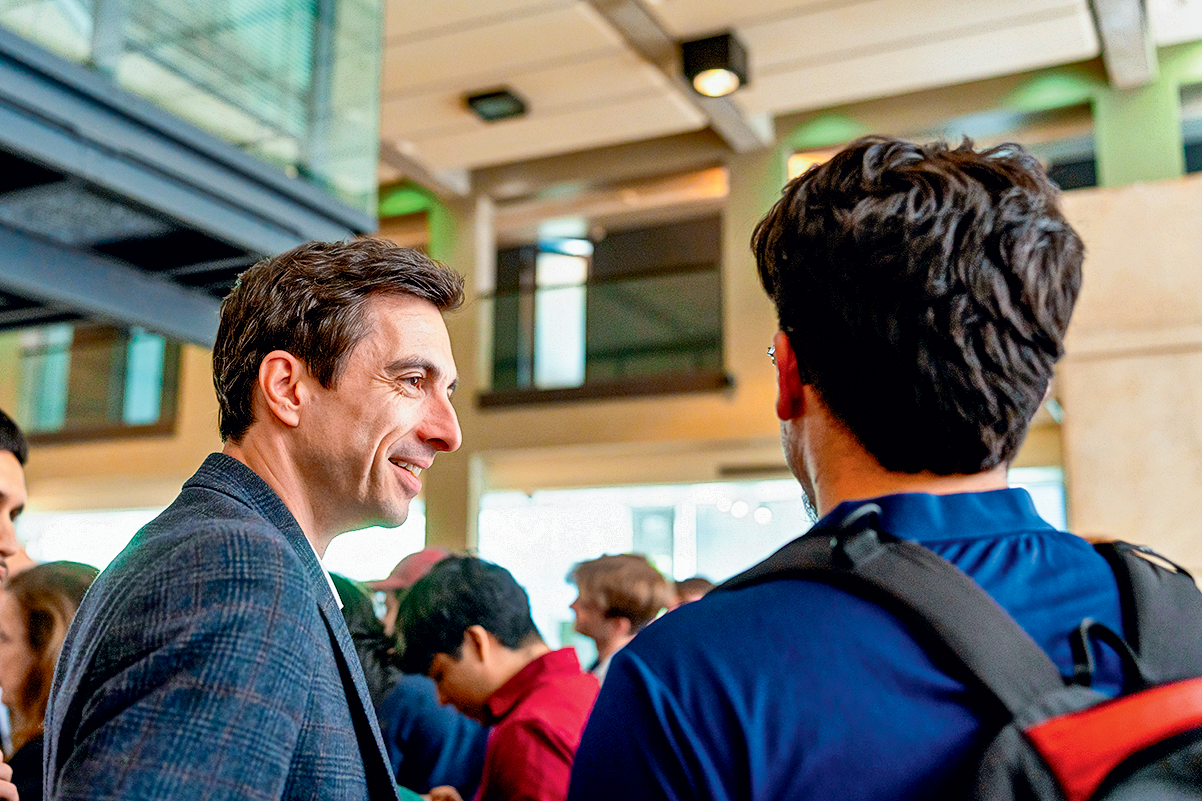
You don’t necessarily have to plan on packing your bags the day after graduation, like Dieterich, but you should be open to opportunities either to travel or relocate. “Be ready to raise your hand for those opportunities while you can,” Crapanzano said. “Especially at points early in your life, and early in your career, when it is logistically easier than doing it later.”
Networking
Deepening connections and engagement in Easton, Lehigh Valley, and the world are priorities of the College’s strategic plan.
Clark, for example, met her husband while she was doing postdoc research in Washington. He had a research opportunity in France, so she decided to join him during COVID. Professionally, she says, the move opened up a lot of opportunities that she wouldn’t have had previously. She eventually pivoted to work for an American company (in France) that published textbooks, which tapped into her mechanical engineering degree and the teaching she did during graduate school. Now, she works for an X-ray research facility as a software engineer, a space she said was a good example of globalization: “There are users who access the facility from all around the world, so I get to meet people from many countries all of the time.
Assante Carrasco, whose career has been in private equity, offered that there’s value in saying “yes” far more than you say “no.” She recalled her first experience abroad, as an economics and business major with an internship at the London Stock Exchange. She and her husband, Marc, wanted other students to benefit from that same kind of enrichment and global engagement, but understood traveling costs can make it difficult. So they established the Global Learning and Community Engagement Fund in 2012, in which Lafayette scholars from all majors can apply for aid to travel in order to research their theses.
Earlier in her career, one of her first clients was the United Nations. “They really are the ultimate global organization,” she said. While the task of working with multiple foreign countries may have been daunting for some, she bought an international phrase book, learned how to say “hello” and “thank you” wherever her feet were, and never looked back. “I could have never imagined the places my career has taken me.”
Change is constant in a global market. Be flexible and resilient.
Whether it’s politics or a pandemic, developments or crises around the world are constantly shaping business. First piece of advice? Take a deep breath. Then, reason with your head, use your experience, and get comfortable knowing this won’t be the last time things change.
“Globalization is part and parcel of the industry. You can pick any period of time in finance and there will be events that have a sizable impact,” Crapanzano said, recounting the tech bubble bursting in the early 2000s and its cascading effect. “Something would happen in the global economy, and there would be a reaction from regulators around the globe.” Over the years, Crapanzano has noticed a much more collaborative dialogue in regulating, and thinks this trend will get even stronger, making global finance feel like even a smaller world than it is today.
“Be ready to raise your hand for opportunities,” Benny Crapanzano said.
Adaptability is key. Due to a decline in the global spirits market, Valentin noted that many companies have been merging together, buying smaller local brands, and trying newer markets—India, for example, has the fastest growing alcohol market in the world right now. “You have to understand where the markets are and when a big market is losing,” he said. “You see the map and it’s like, ‘OK, who is doing what?’”

Communication
Even if you don’t know the language, you need to be aware of nonverbal cues and nuances in various cultures.
Lately, Clark has noticed a shift in talent recruitment, one that benefits European research. With recent challenges getting a U.S. work visa and decreased funding for U.S. research, international students are being drawn to Europe for opportunities. As a software developer at European Synchrotron Radiation Facility, she’s also anticipating a shift in the industry because AI is so efficient. “I don’t think it’s quite at a level to replace humans, and probably never will be, but it can be very useful.”
With AI accelerating and deepening globalization, Assante Carrasco mentioned two areas being impacted: the staggering early bets in AI (“People are investing at a magnitude we certainly haven’t seen before,” she explained), and the power required to support the data centers. Although the U.S. has been at the forefront of building infrastructure, there is a need for power—all kinds.
Crapanzano already sees the tech being rolled out in spaces like wealth management and portfolio assistance, but thinks it will take some time to understand its biggest effects. “We know it’s going to be an efficiency tool on a scale we haven’t seen before, but it’s a slower burn,” he said. “We have had cycles of innovation like this in the past, and there are always winners and losers who come out of it. That’s where we are now—who is going to be Meta or Facebook versus Netscape?”
Worldly Advice
Introducing the alumni behind the globalization panel.
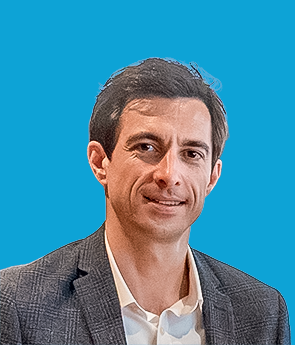
Gabriel Valentin ’02
Global marketing for spirits and luxe brands

Linda Assante Carrasco ’90
Institutional private market investor
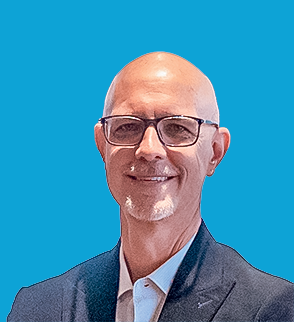
Patrick
Dieterich ’93
General manager at Nuseed Europe
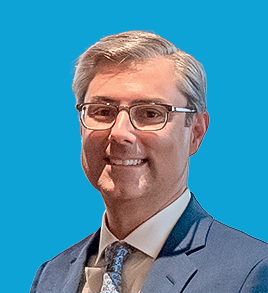
Benny Crapanzano ’97, P’26
Managing director, Morgan Stanley

Alicia Clark ’11
Software engineer and data scientist
Let curiosity curate your future career.
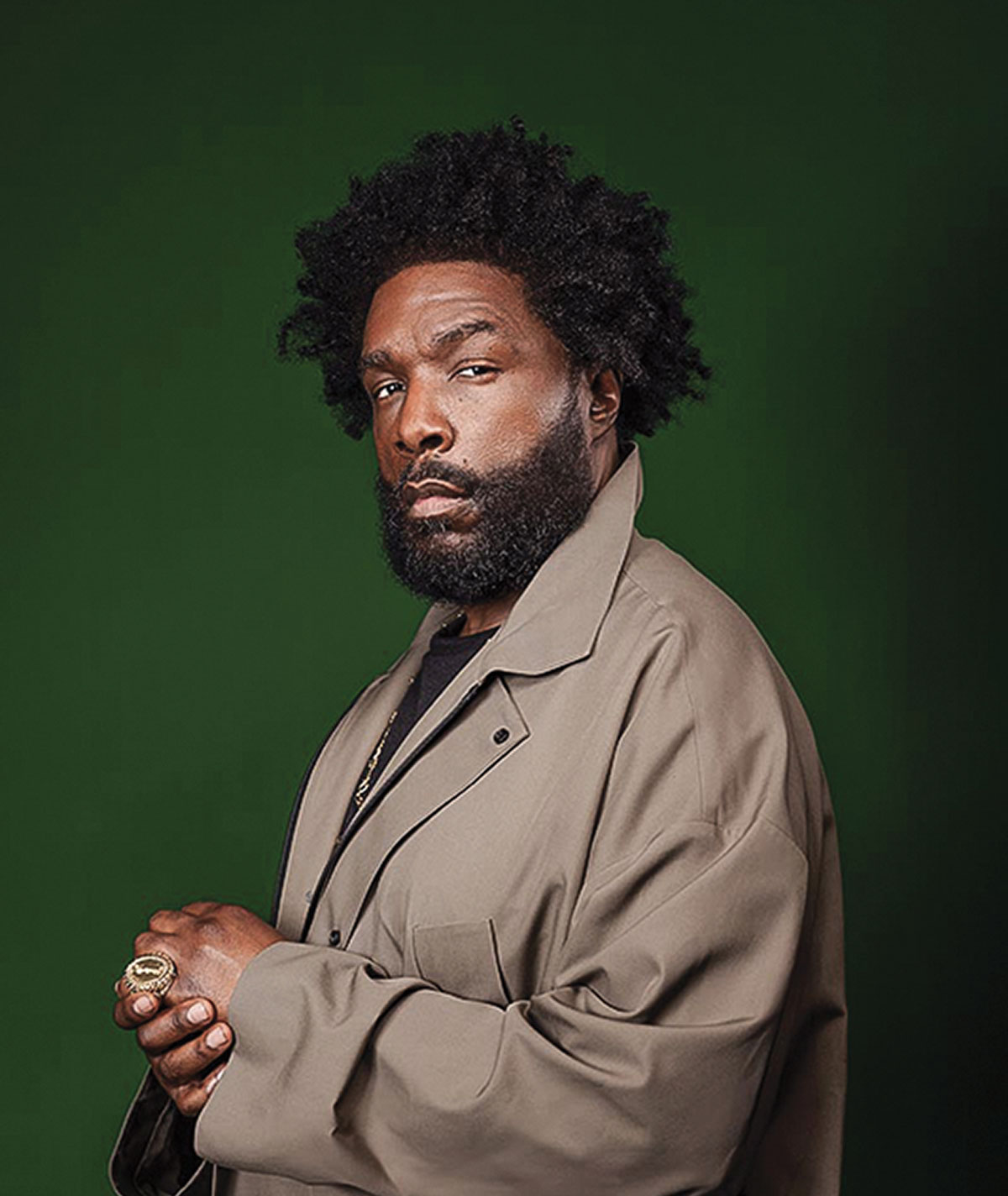
Crapanzano’s career choice, he said, has made him a better global citizen. “It’s certainly made me more aware of things happening outside New York and outside the U.S.”
Assante Carrasco told the students the ability to communicate, and connect, across languages is so critical, but the starting point of that? Being able to think analytically.
“What’s funny about globalization is it creates a state of mind to be even more curious about your own culture,” Valentin said.
Creativity
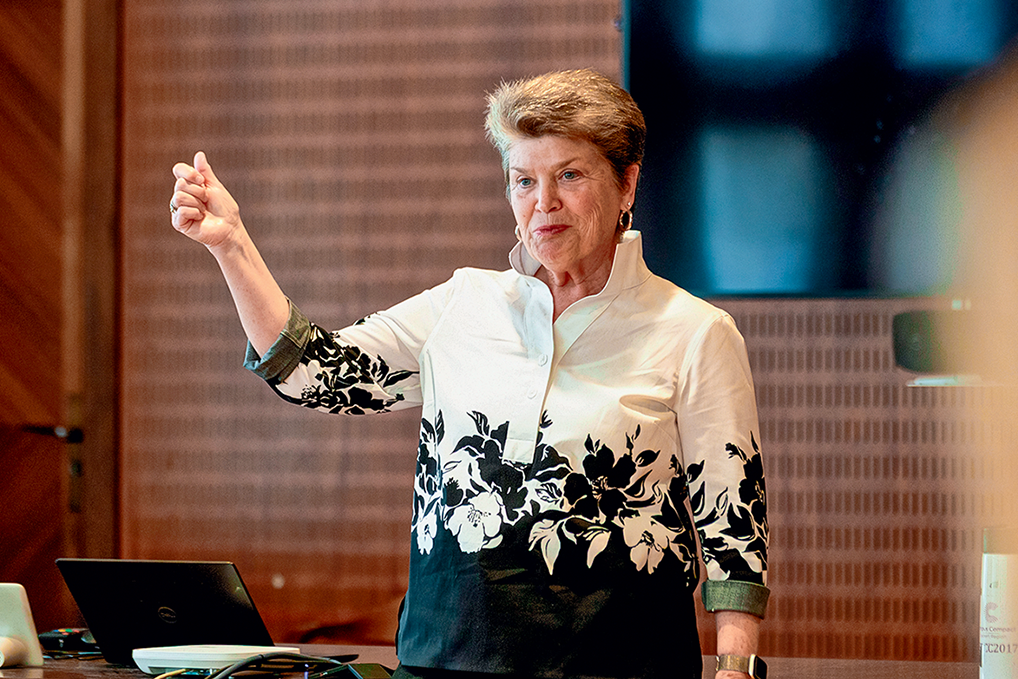
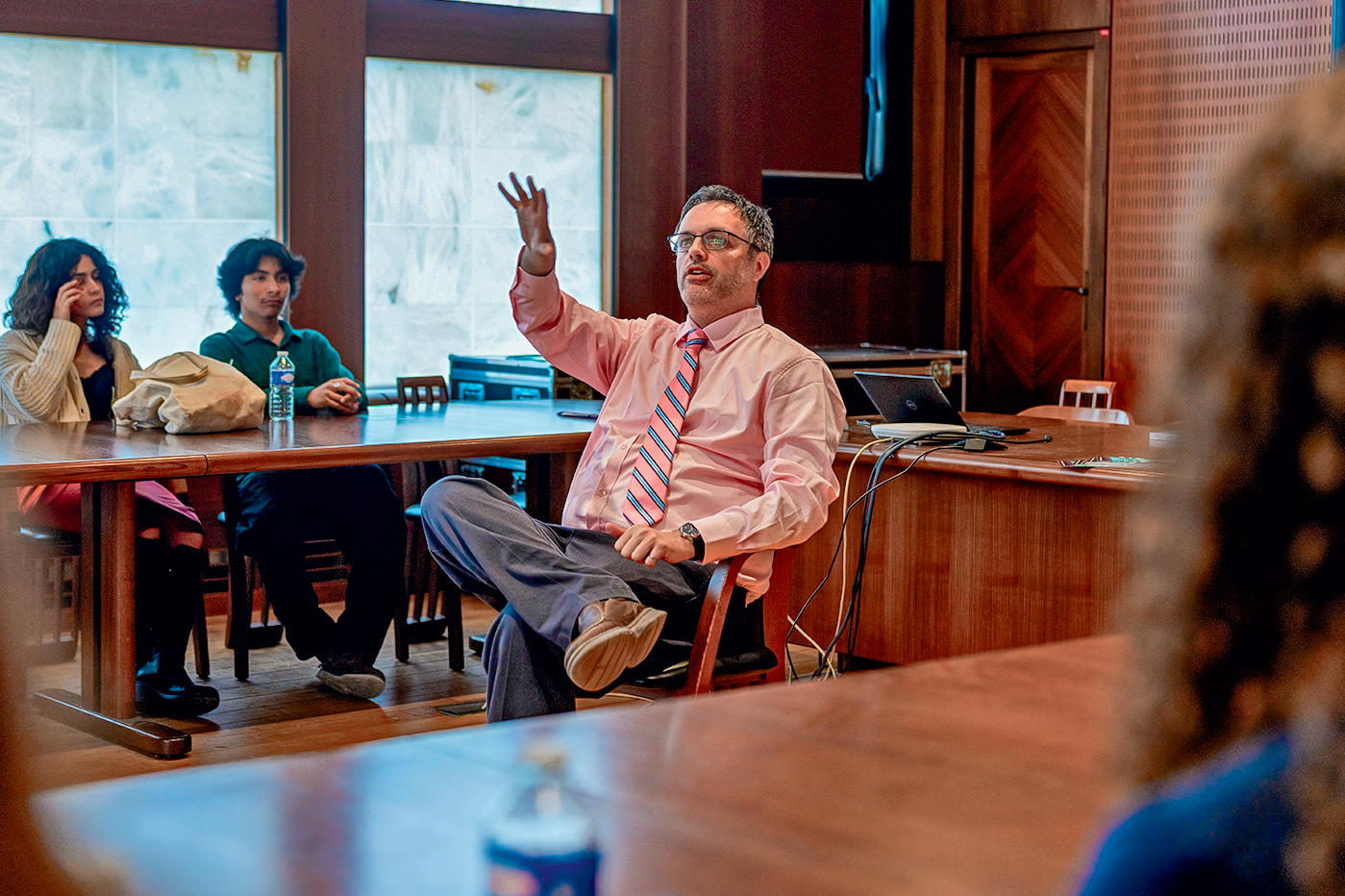
Part of being a Lafayette engineer, Hannah Stewart-Gambino said, is having a better imagination of the unknowns.
In the Paris conference room, one student asked for advice on navigating the tough job market. Valentin said to try and be patient and learn from the journey itself. For example, he didn’t know about his interest in marketing until he took a class on it at Lafayette. After he graduated and returned to Europe, he continued his studies by completing a master’s degree and an MBA in marketing. “It came together in an ephemeral way, but it took some time,” he said.
Crapanzano suggested that while the stress of finding a job right now is real, the opportunities are also greater. And oftentimes, finding a job adjacent to your goals could be just as useful. “Don’t feel pressure to find the role you’re going to love for the rest of your life—because it’s probably not going to be, right?”
Other advice from the alumni panel: Surround yourself with people whom you respect and can learn from, find something you’re passionate about.
And, above everything else, be curious about the world.