Radio Lafayette
Eighty years after airwaves were approved, WJRH 104.9 FM remains one of the oldest student-run stations in the country.
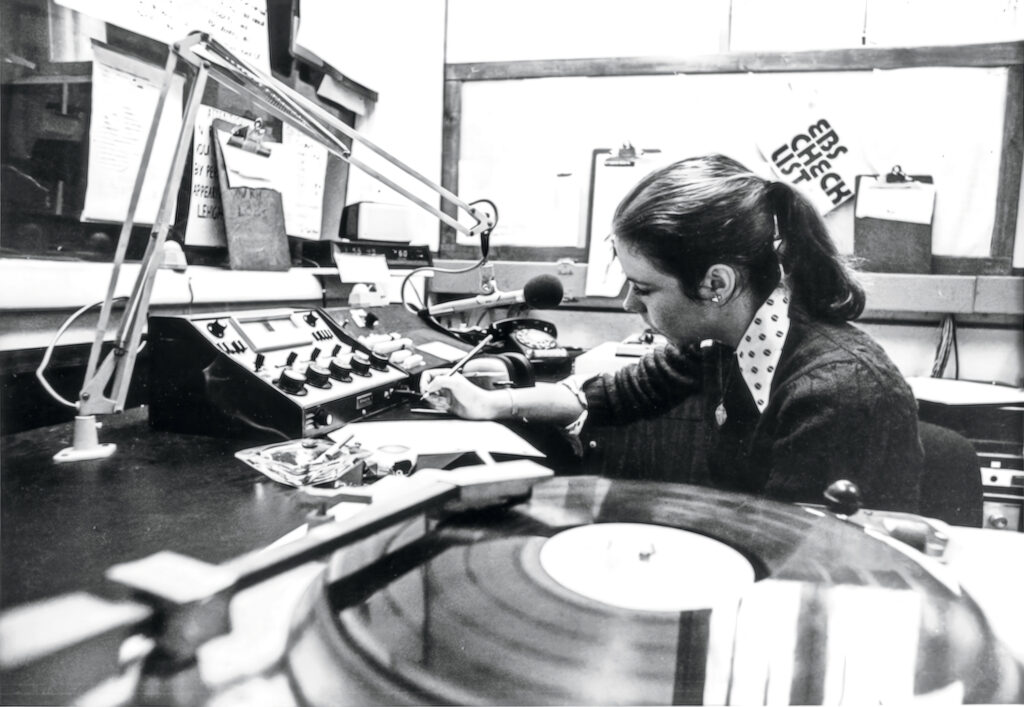
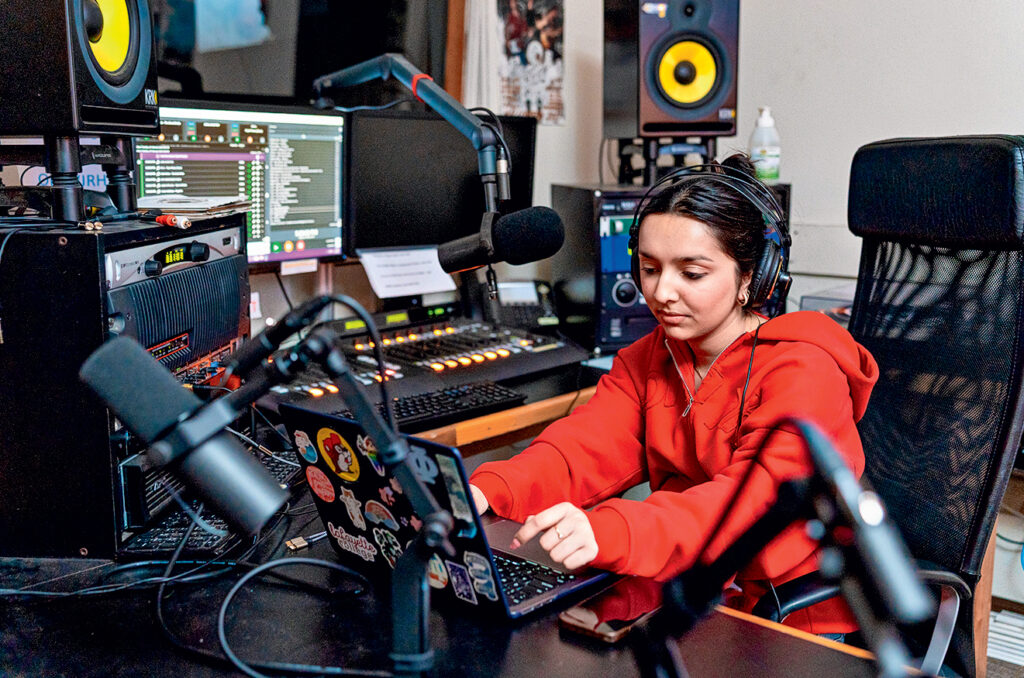
Above, records and landlines may be of yesteryear, but DJs continue to be original influencers.
PHOTOGRAPH COURTESY OF SPECIAL COLLECTIONS
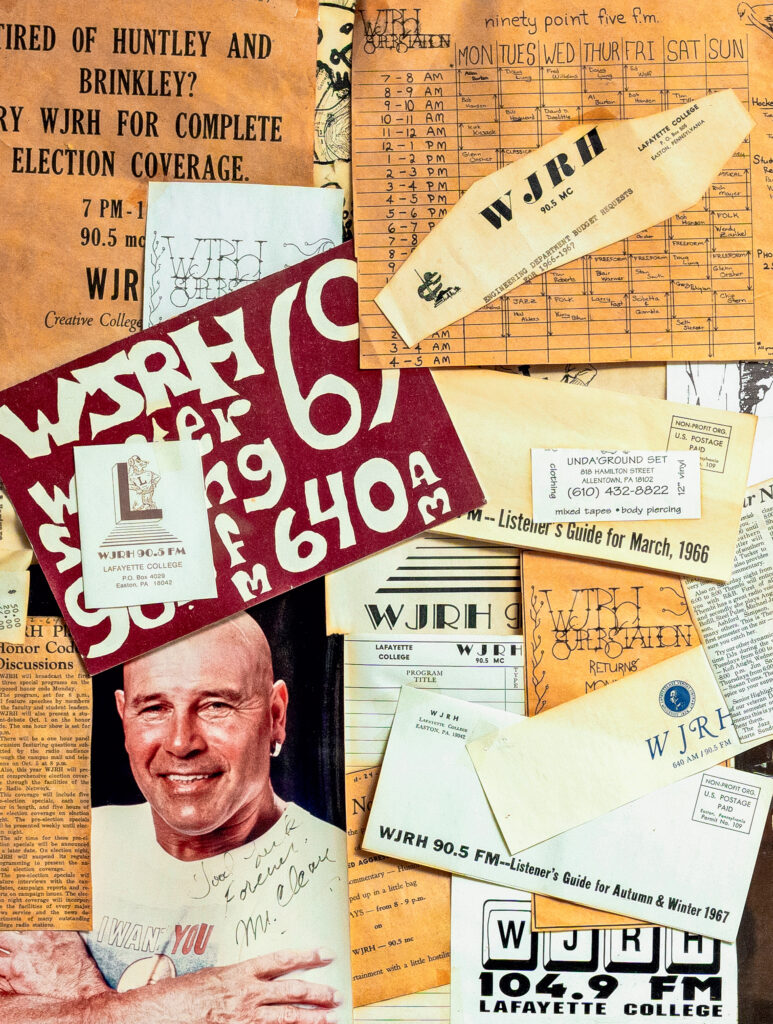
Imagine Lafayette in 1946—the new post-war world. As the year went on, headlines from the student newspaper were published with growing optimism: “R.O.T.C No Longer Required” and “Possibility of New Social Era Opened by Interfraternity Dance” to, in November, “Students’ Plan for Radio Station Underway.” Only a handful of other colleges had student radio stations at that time; just a decade prior, Brown University successfully experimented with stringing wires from dorm to dorm to relay messages and recorded music.
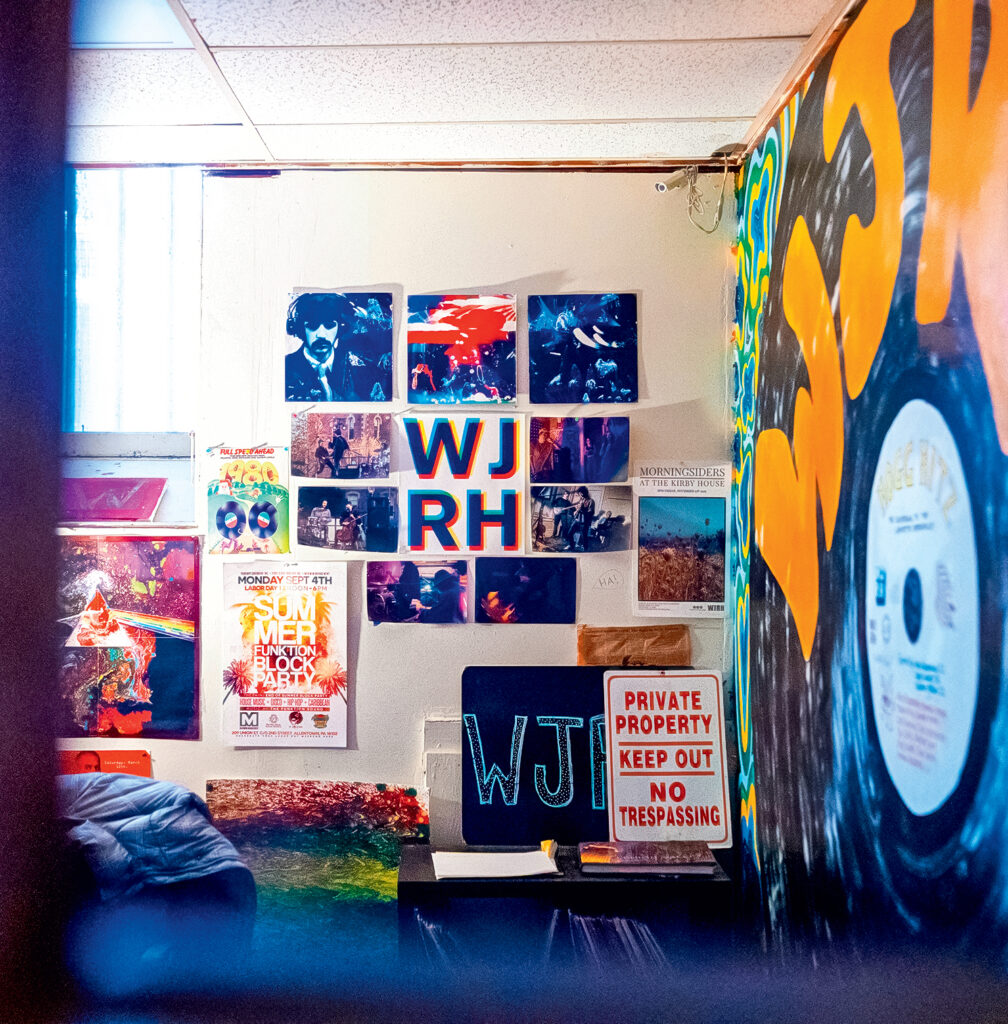
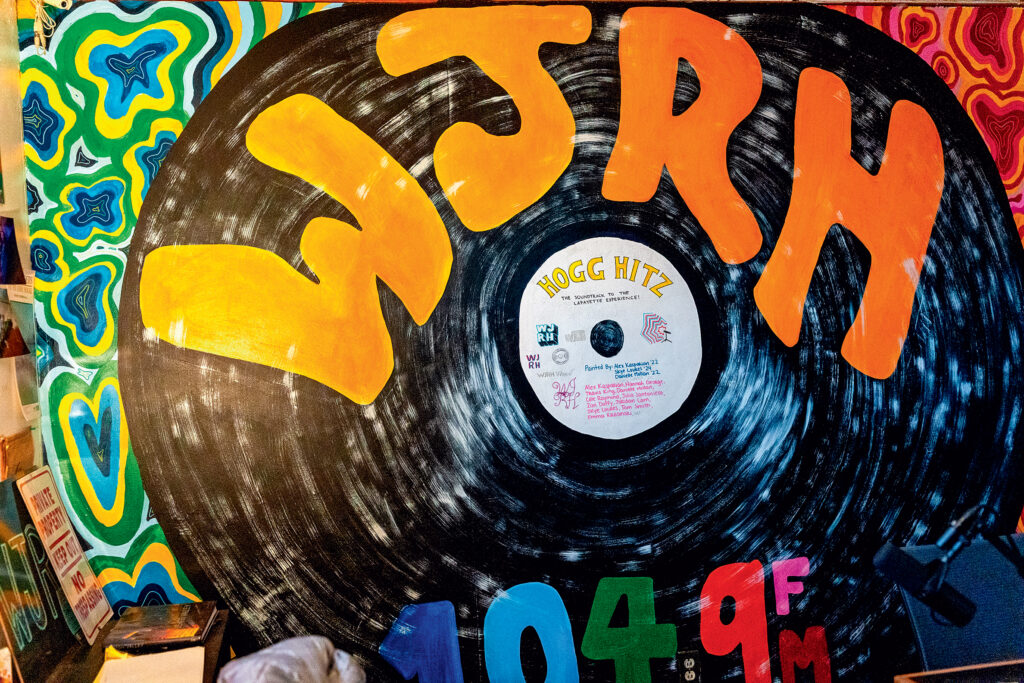
The first official broadcast of Lafayette’s WJRH would occur the following fall on Oct. 1, 1947, in Hogg Hall. Call letters “JRH” were assigned to recognize James Renwick Hogg, the donor and namesake of the building, which has remained the station’s longtime home. With a halfdozen microphones, two turntables, and $1,500 of war surplus equipment donated by the electrical engineering and physics departments, Radio Lafayette was born on 90.5 FM, with “Songs at Seven” broadcast over the campus airwaves for four hours in the evening.
PHOTOGRAPH BY JAQUAN ALSTON
PHOTOGRAPH COURTESY OF LARRY FAST
PHOTOGRAPH BY JAQUAN ALSTON
From The Lafayette in May 1947: “The studio is complete with acoustic-tiled ceilings and partitions, draped walls, glass panel, and cork floors … Great things are anticipated of Radio Lafayette, WJRH.” By 1948, the FCC had introduced noncommercial education licenses for low-watt college radio stations. Original WJRH members Raymond DePuy ’50, Jerome Alenick ’49, and George Menkart ’50 worked to build the foundation by testing the station’s early technology, launching an advertising sales campaign, and enhancing the programming.
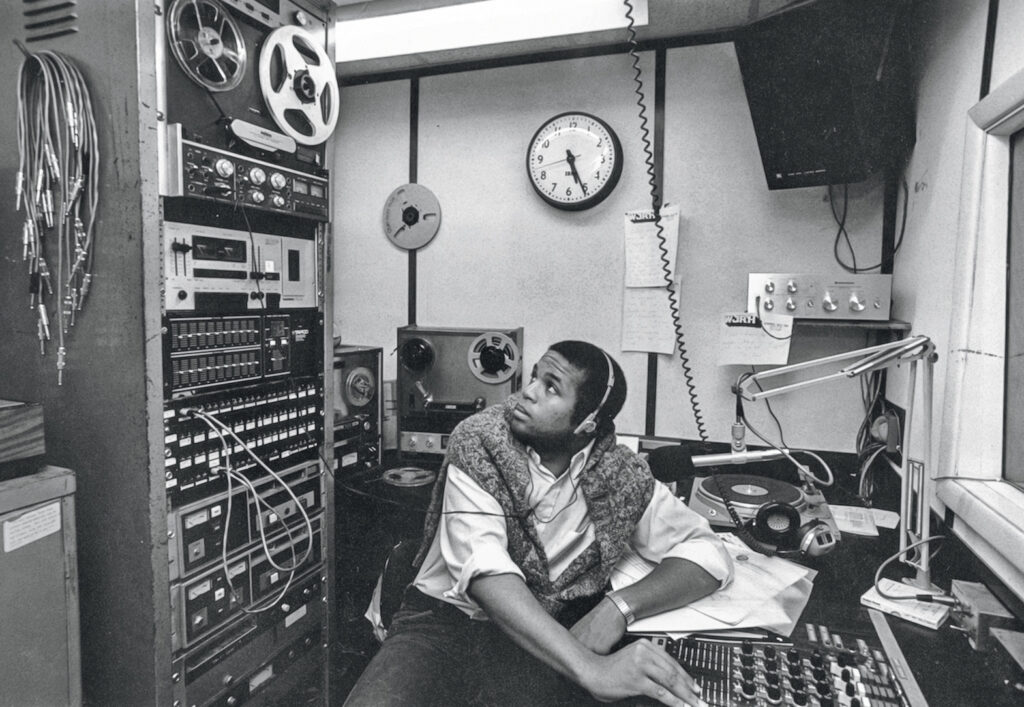
Over the years, the studio, filled with new and rapidly changing technology, became a hub for engineering students itching to get their hands on the machinery and music lovers waiting for their turn to control the airwaves. Station pioneers such as E. Joseph Mosbrook ’56 would discover a love for jazz and journalism in college, eventually leveraging that experience into an enduring and remarkable career for both in Cleveland. Throughout the ’50s and ’60s, the station battled growing pains as the small-but-dedicated group of students tried to expand the signal’s reach first to the corners of campus and then across College Hill and into downtown Easton.
These decades would have some of everything: a move from the third floor of Hogg Hall to its basement, program diversification and leadership changes, FCC criticism and battling for funding, a mandate for a frequency change to 104.9 FM, technology upgrades, and sports broadcasts. The one common thread through it all, though, is the dedication of its DJs and engineers, making WJRH one of the oldest student-run college radio stations in the country.
PHOTOGRAPH BY JAQUAN ALSTON
PHOTOGRAPH COURTESY OF SPECIAL COLLECTIONS
PHOTOGRAPH COURTESY OF SPECIAL COLLECTIONS
GROOVY DEEP CUTS
When Larry Fast ’73 arrived on College Hill, WJRH was a 10-watt, 10-hour-a-day operation. This quickly changed in the 1970s.
Larry Fast ’73: At first, I was an engineer behind the console, not getting to pick the records I wanted to play or anything like that. At that time, the station was playing ‘Top 40’ and pop hits—the things you would hear on commercial radio. Frank Urbaniak ’75: I had a very standard collection of records coming into college. I first wanted to join the marching band, but when I realized that wasn’t for me, I tried out the radio station, and everything changed.
Fast: The big transition happened in late April of 1970—the second semester of my freshman year—when President Nixon and his team ordered a covert invasion into Cambodia from Vietnam, and campuses across the country exploded in protest. There was an all-campus strike, and when the National Guard killed four students at Kent State, that kicked everything up to an even higher level. At that time, a lot of college radio stations linked up over what was then called the ‘long lines on the Bell Telephone system’ to create an intercampus link, forming a network to tell us what was happening on all of the campuses. We became kind of a regional hub for other campuses in the Lehigh Valley, and we started to expand to stay on air as long as there was input coming in from the network. A skeleton crew of volunteers stayed to run the station over the summer, which was rare in the college radio world, and 24-hour programming kicked off in the fall of that year. We also continued to provide our own music programming, which started to get a little wilder as something called progressive rock was coming out of the U.K.
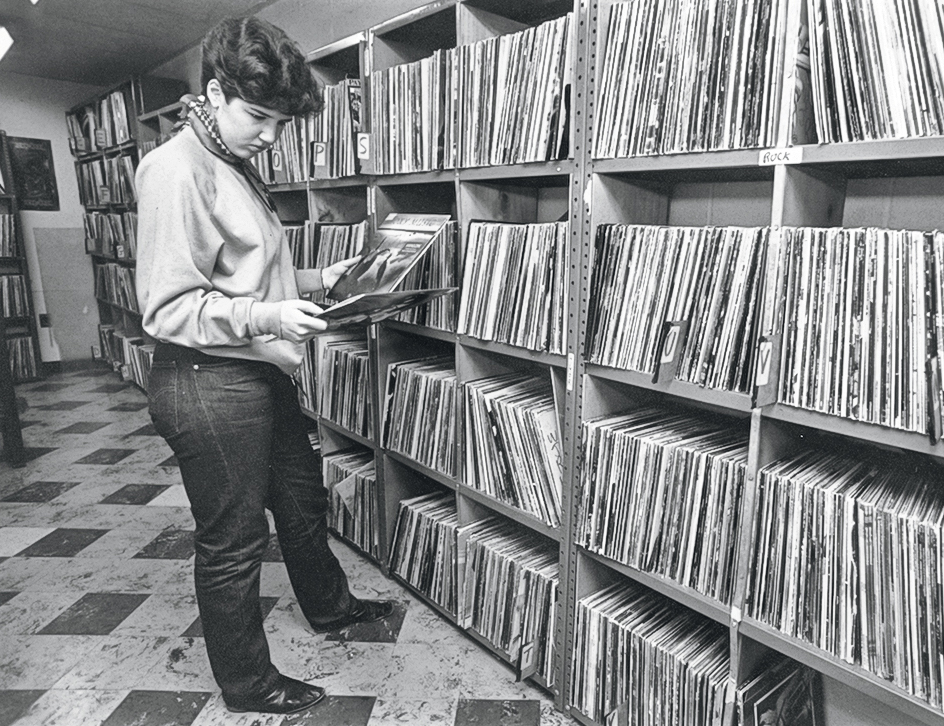
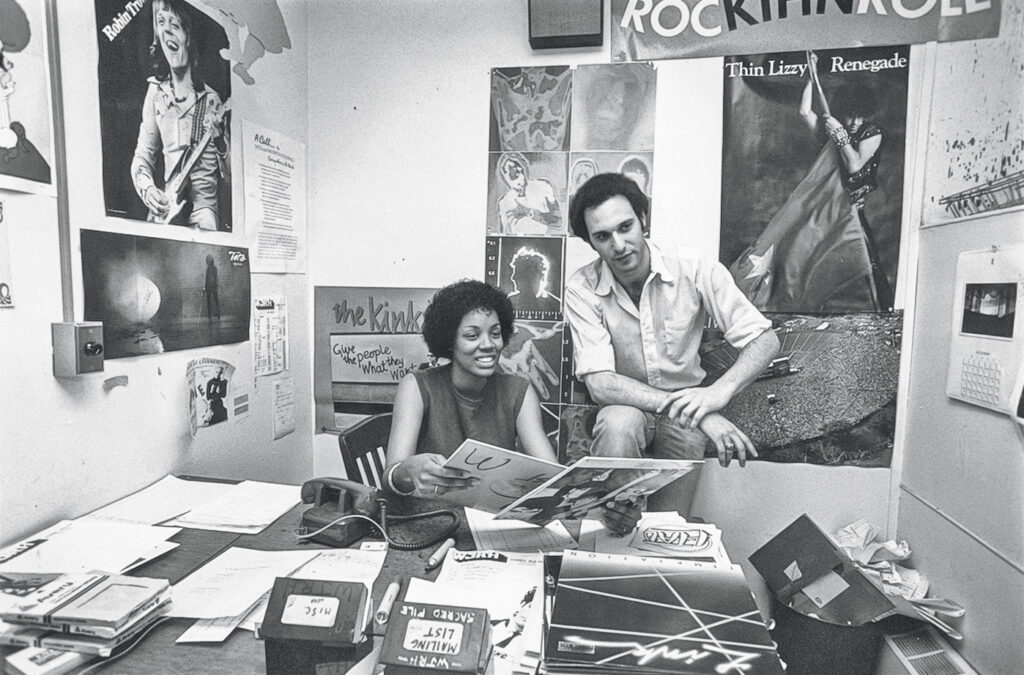
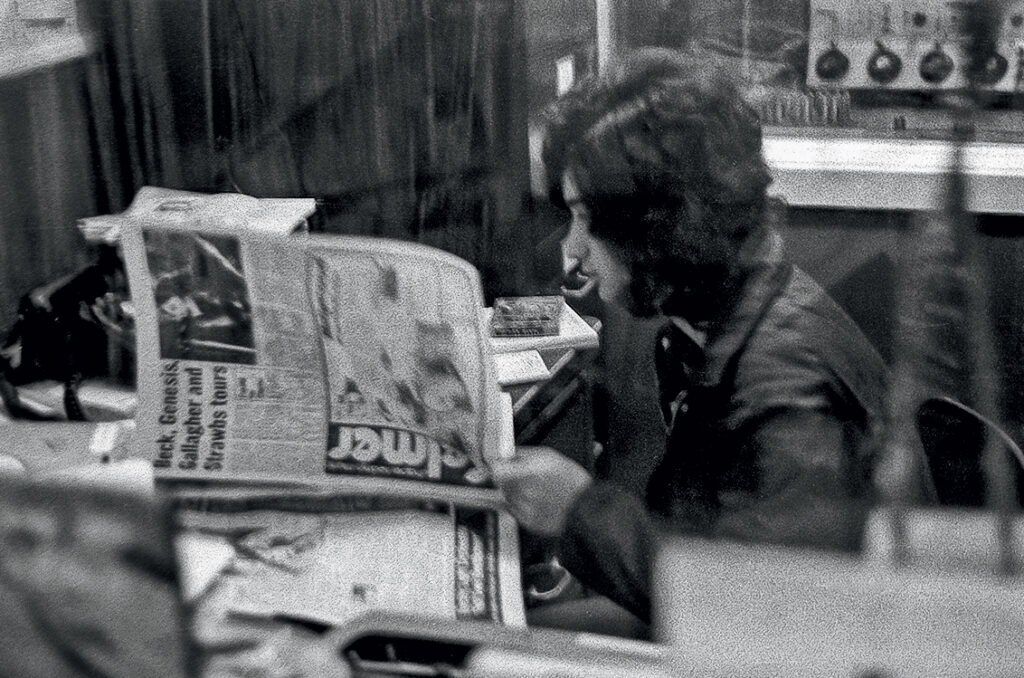
Urbaniak: When I got to WJRH, there was a whole library of records I had never heard before sent by record companies. I would take piles and listen to them, and that’s how we first discovered bands like Yes and Genesis. I wanted to start pushing people to expand what they were listening to, because at the time, everyone was playing the ‘Top 40’ hits you’d hear on the radio. We realized if we wanted to meet the bands and learn more about what they liked to expand our horizons further, we’d have to have publicity, so we started a publication called The Rolling Paper.
Fast: We wanted it to be like a mini Rolling Stone. We’d write reviews and include the records we were sent, because we wanted record labels to know that when they sent us material, it was getting programmed.
Urbaniak: Record companies started sending us notices, telling us when bands were playing nearby and asking us if we would like passes—we saw Genesis at the Lincoln Center in their U.S. debut, saw Billy Joel right when ‘Piano Man’ came out at a private concert for 100 people; we saw The Eagles as an opener before they had one of the bestselling records of all time. We even had the privilege of becoming friends with some of the musicians. I still have a stack of letters from Rick Wakeman of Yes when he sent me test pressings of his first solo album. I loved everything we were doing. It was so incredible to see so many shows like that.
Fast: We lived and breathed that station. Every day, Frank and I, and a few others, would convene during our lunch break, pick up some sandwiches on March Street, and go through the new issue of Billboard and the new record packages that had come in from the labels. We were just making it up as we went along, and later, when I worked at professional radio stations, it turns out this was exactly what they did.
PHOTOGRAPH COURTESY OF SPECIAL COLLECTIONS
PHOTOGRAPH COURTESY OF SPECIAL COLLECTIONS
SEGUE TO SPORTS
With the station established as a name in the music world and block programming being introduced, some students in the 1980s turned their focus toward another facet of popular radio: sports broadcasting. The decade was bookended by big names in the sports world. Mark Holtzman ’80, current vice president of non-baseball sports events for the New York Yankees, kicked things off with the founding of the College Radio Network, and Beth Mowins ’89, trailblazing play-by-play announcer and the first woman to call a nationally televised NFL game, closed out the decade by talking with other athletes over the radio waves.
Mark Holtzman ’80: I always wanted to get into sports—my next-door neighbor growing up was Phil Rizzuto, Yankees shortstop and broadcaster. Everyone told me there were a lot of smart people with good voices who wanted to get into sports broadcasting, so what I needed was a point of difference.
Beth Mowins ’89: I knew from a young age what I wanted to be: a sportscaster. I was always encouraged to get experience on the radio while I got my degree in English, and that’s where WJRH came in.
STREAMING WORLDWIDE

In addition to catching WJRH on 104.9 FM around Lehigh Valley and parts of New Jersey, listeners can stream the station from anywhere at anytime: Just go to wjrh.org and look for the play button at the top of the homepage — or simply click on the play button below. Since students are in class during the day, the station has a “robo DJ” to fill in for those hours, playing favorite music from preset student playlists.
Holtzman: By my sophomore year, I was calling football and men’s basketball games. The genesis of the College Radio Network was my relationship with Phil Rizzuto. He was able to get me press passes to go on the field for WJRH and talk to some Yankees players, which was unheard of at the time. A few people said to me that they were really valuable interviews, so I got in contact with other college radio stations to pick up the interviews and play them on air. I ended up broadcasting to as many as 25 college radio stations, and I was able to get press passes for the Phillies and other teams. We built up a little network where students from other schools were participating as well. I interviewed some of the greats: Pete Rose, Reggie Jackson, Mickey Rivers.
Mowins: I had a radio show that was a blend of a couple of things I loved. I was really into rock ’n’ roll—Van Halen, AC/DC, The Rolling Stones, Led Zeppelin—and all the supercharged music we were playing at the gym. In between songs, I’d bring in other athletes, and we’d talk sports. It was a great way to get familiar with radio systems and ‘getting reps,’ or spending as much time as you can honing the craft. I learned how to be succinct and ask people questions that led to better answers. It was the first place I saw in practice that ‘how’ and ‘why’ questions are the best when interviewing someone, and this has stuck with me for my entire career. My first job out of college was working at a radio station as a news director and sports director, so WJRH was a great launchpad for me.
Holtzman: I also had a radio show called ‘Call The Boss,’ which I think was the first call-in show on the station. People could call in to ask about anything, from girlfriend troubles, to life at college, to world issues, to sports. I had so many opportunities I probably wouldn’t have had at a station at a bigger school. The general managers believed in me and didn’t restrict me. They let me try things and figure it out on the way.
Mowins: My friends and I always tuned in to hear what other people were doing. There was an eclectic mix of music and talking going on, and it was a blast to discover new things.
Holtzman: There were times when I could tell the show was catching on. I remember this basketball player, Mike Bellamy ’78, who would shoot long jump shots, and I would say, ‘Here’s the rainbow!’ There was a night I was sitting in Skillman, and someone threw a piece of paper into the trash and yelled, ‘Here’s the rainbow!’
1990s BOOM
The 1990s were all about growth and diversification for WJRH. The station grew to more than 100 DJs, with new types of programming popping up each semester, drawing attention from the local community.
Tinabeth Piña ’93: I first got involved in WJRH because I was interested in working in television, and Lafayette didn’t have a communications major. I called myself DJ Sabor, or DJ Flavor, and my tagline was ‘Trayendo a tus hogares lindos temas musicales, para el placer de todos,’ which translates to ‘Bringing beautiful music into your homes for everyone to enjoy.’ I played a variety of Latin music, including merengue, cumbia, and salsa. Spanish was one of my majors and something I was interested in developing, so I would go back and forth between English and Spanish while DJ-ing.
Donna Barsamian Sirounian ’92: My show was called the ‘Daring Donna Show’ because I dared to be different. I modeled the show off of WLIR 92.7 out on Long Island, a local show that’s no longer in existence, but it was the time when groups like Duran Duran, The Police, and David Bowie weren’t mainstream yet. I played some New Wave music, but there were semesters I focused entirely on reggae, which wasn’t being played much at the time.
PHOTOGRAPH BY JAQUAN ALSTON
PHOTOGRAPH BY JAQUAN ALSTON
Piña: My show was a mid-afternoon spot, which I fit in between my classes and track practice. I had people from campus and even from the local jail asking me to play certain songs, and, of course, my mom was listening and correcting my Spanish grammar.
Barsamian Sirounian: I was a DJ all four years and worked my way up to general manager my senior year. I remember starting off with a late weeknight slot, which eventually progressed to one during the day when a lot of people were listening. We moved to a new space in Hogg Hall the summer before my senior year, and we spent that year trying to extend our reach and increase our promotion. There were semesters when our entire schedule was full with shows.
Piña: From what I remember, it was the first bilingual program on the radio there or even in the immediate Lehigh Valley area—I don’t remember any Spanish music being played before that. My goal was to explore my interests while expanding the understanding of Hispanic culture on campus.
Barsamian Sirounian: It was also an era of changing technology. At first, we primarily used cassette tapes and would record songs from the radio if we couldn’t find them elsewhere. By the time I was a senior, CDs were the main way of playing music.
LAUNCH INTO 21st CENTURY
From September 2023 to January 2025—a period of 18 months, or three full semesters—the radio waves of WJRH were silent. Student leadership was working tirelessly behind the scenes to get the station up and running with an eye toward longevity and accessibility.
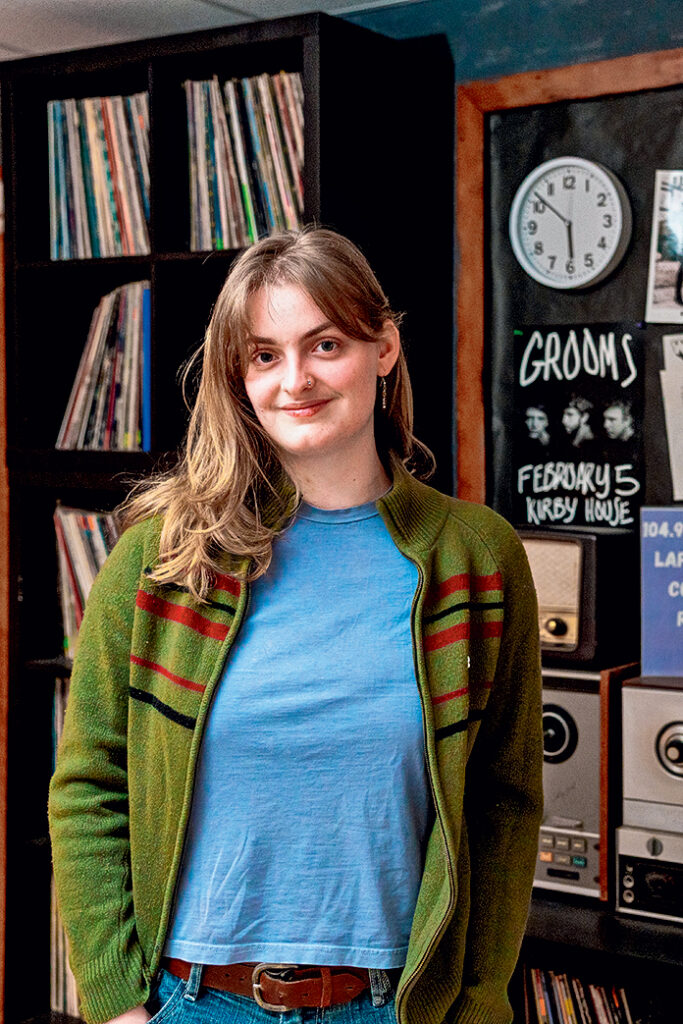
Tess Stanley ’25: We always had radios playing in our house growing up. My dad is a radio enthusiast and was my main source of discovering new music as a kid. My dad also spoke so fondly of being part of the college radio scene when he was in school, and when I was looking at colleges, I knew I wanted to find one with its own radio station—this was actually its own box on my spreadsheet during my college search.
PHOTOGRAPH BY JAQUAN ALSTON
Eva Donato ’26: I grew up in a very musical community in Woodstock, N.Y. I was always listening to the radio, and my dad is a musician himself. I always knew that when I went to college, I was going to be part of the radio station.
Stanley: I got involved during my first semester and fell in love with it immediately. It was so fun to have an hour dedicated to music, but also dedicated to expressing myself just for me.
Donato: I kept getting more involved in my four years, and now I’m the general manager. I listen to so many artists, and I’m influenced by so many different people.
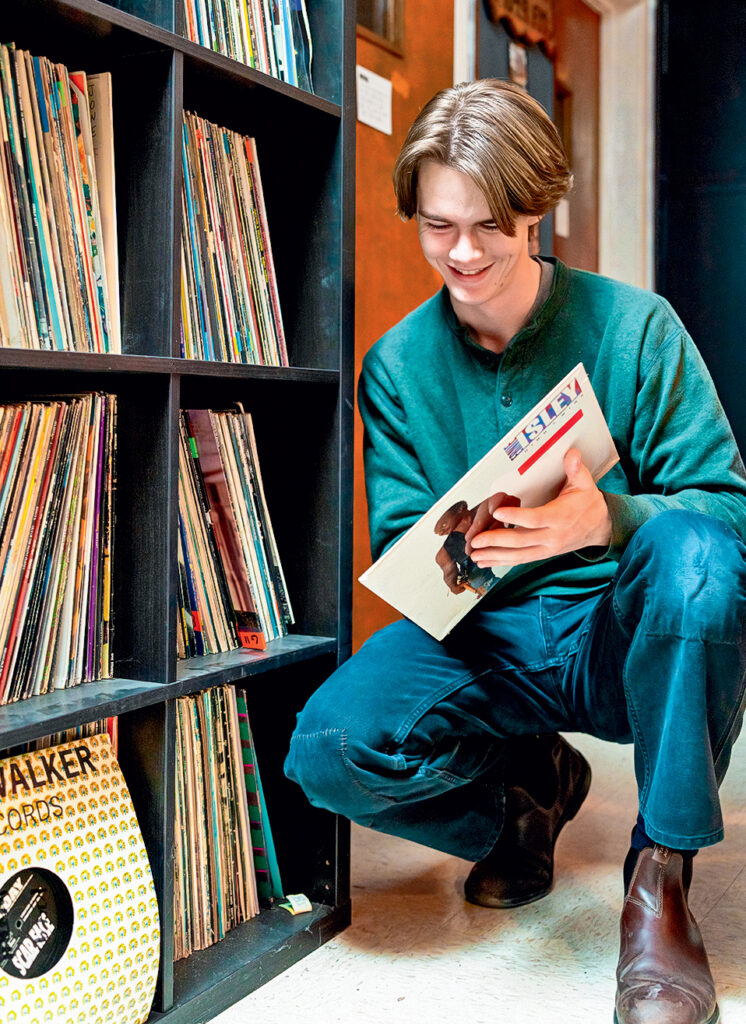
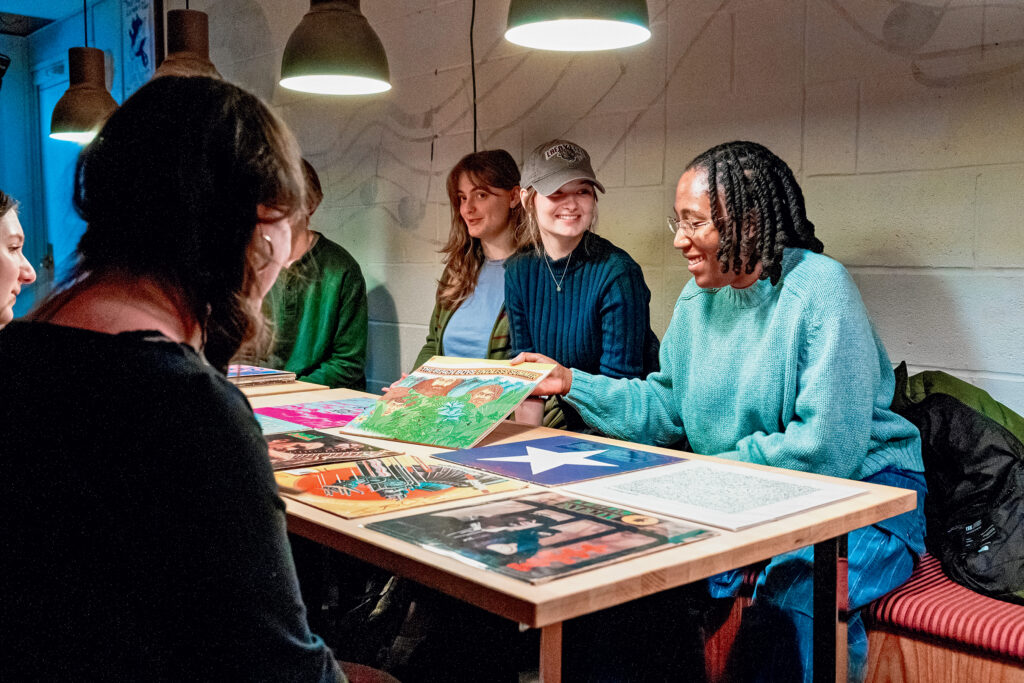
Jen Parsons ’26: When he was at Lafayette, my brother [Tom Parsons ’15] was a part of the radio station, and he still listens today—it means just as much to him as it does to me. My show is called ‘Jenny on the Thursday Block,’ and I play everything from Fleetwood Mac to current indie pop, both from the record collection my dad gave to me and from the catalog we have available.
Donato: In between songs, I’ll pop in and say who showed me the song, or what it reminds me of, and if there’s anything interesting I found out about the artist. Sometimes, I have my friends on the show, and we’ll just talk about music in our lives.
PHOTOGRAPH BY JAQUAN ALSTON
PHOTOGRAPH BY JAQUAN ALSTON
Stanley: In fall 2023, there were a lot of challenges. When we had issues in the past, we were always fixing things temporarily, and volunteer students did our best to figure out what we could. Ultimately, the issues outweighed the amount of effort we as students were able to put in to fix it—it was like a Jenga tower of pieces that eventually tumbled over. As general manager, I was very sad to make the decision to completely go off the air, and it wasn’t something I took lightly, but we needed to pause and dedicate our resources to getting back on the radio the right way.
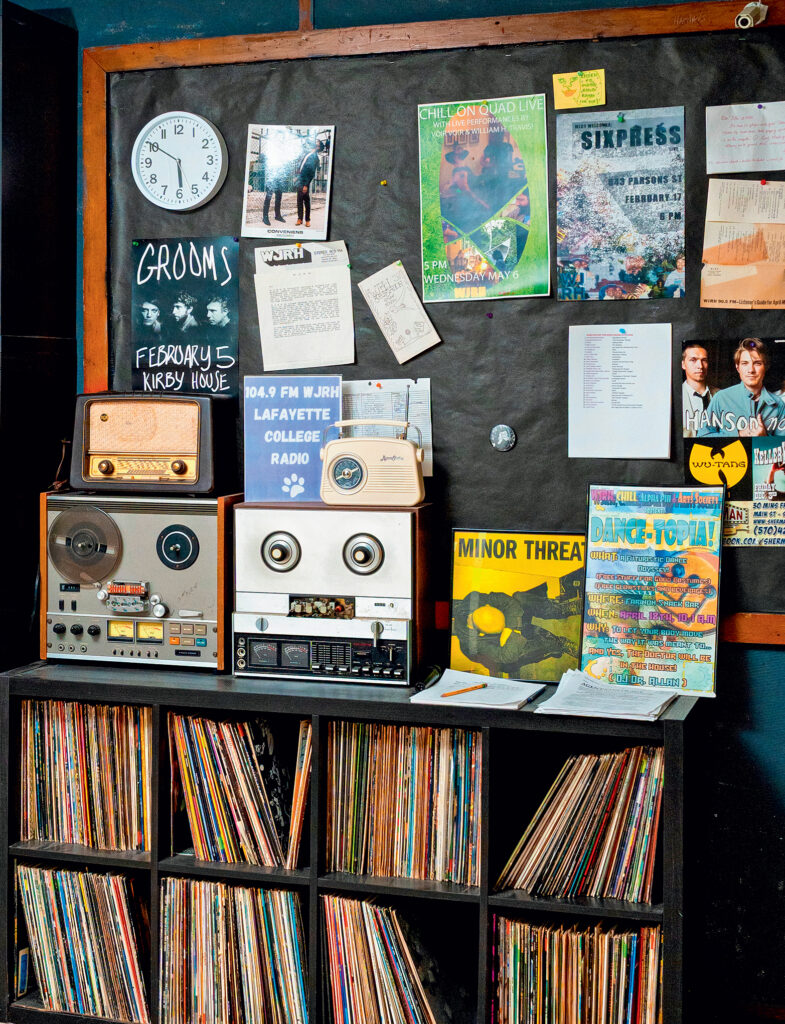
Donato: Tess made it her project to remake the station from scratch. The issue was we didn’t have the funding, so Tess dedicated herself to going to Student Government meetings, speaking to people across campus, meeting with IT and the deans, and working really hard for a year and a half to get it back up and running. We now have a new board and a new streaming platform called PlayIt Live where we have a whole music library built up by our engineers, and it’s more reliable and easy to maneuver. We hooked up record players to the system so people can play records and have them broadcasted, and we’re in the process of doing the same with CDs.
Stanley: It was a difficult period, but I’m happy it turned out the way it did. We hired two engineers (both named Scott), and worked closely with some amazing people in the IT department to create a new website for streaming.
Parsons: Like physical media, college radio and independent radio are important to the culture of a time and a place. WJRH is vital to the culture of music, the culture of Lafayette, and the culture of Easton. It’s an avenue of expression.
Stanley: I hope the station remains a space for creative students from across disciplines to just have a moment to themselves and share what they’ve been listening to or what they’ve been thinking about. In an age where you can just skip over music or pick the exact song you want to hear, radio is a medium that forces you to slow down and maybe discover something new.