Photographs by Jaquan Alston; Illustration by Antonio Pinna
Where curiosity takes root
Inside a high-tech lab in Acopian, students can experiment with soil and plant growth.
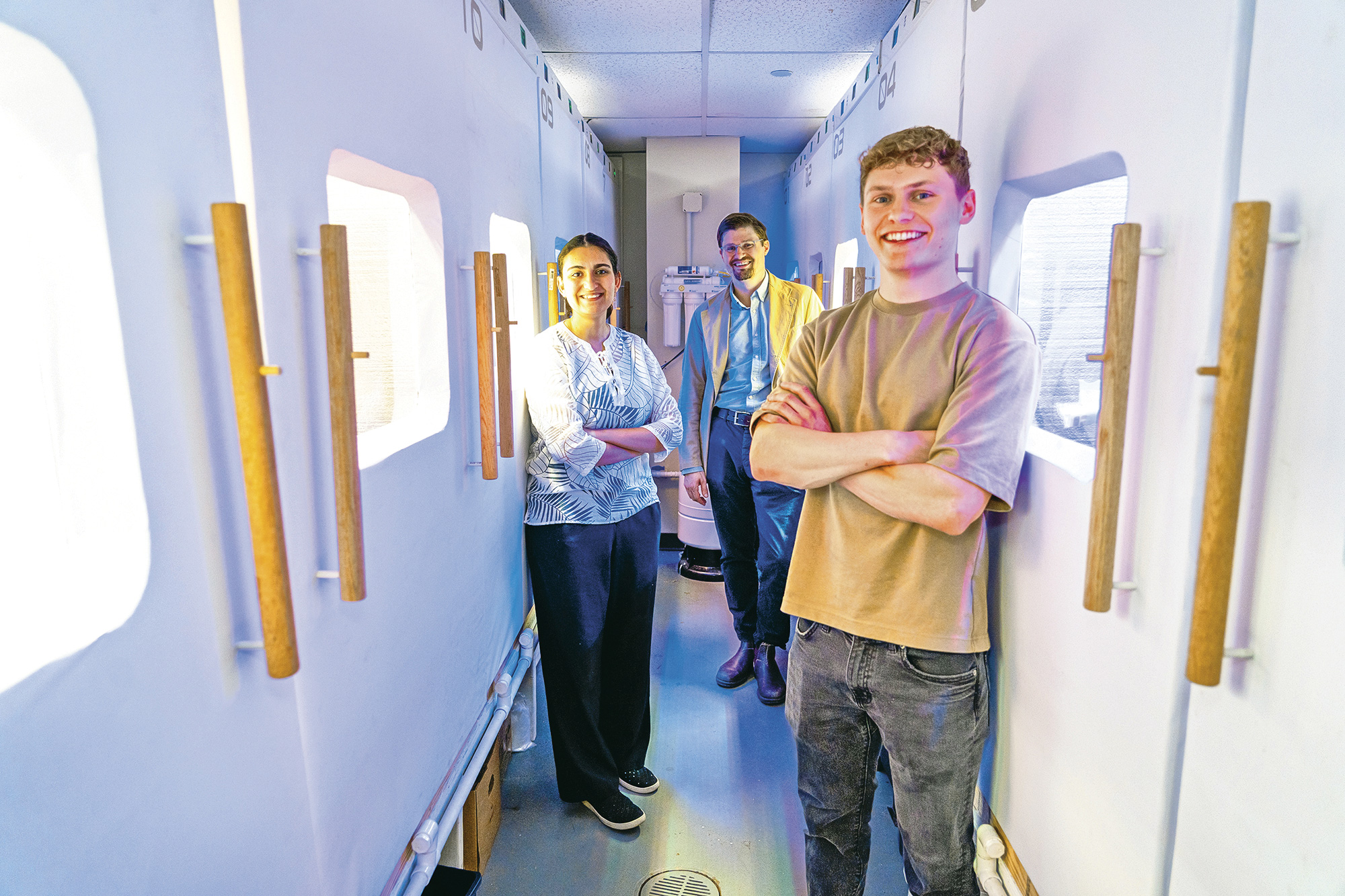
Lovingly nicknamed the “Grow Lab” and situated in the heart of Acopian Engineering Center, Prof. Robert Elliott’s Lab of the Total Ecosystem is a space where students can get their hands dirty conducting research.
In a series of 12 independently controlled growth chambers, Elliott (pictured above, center) and his students manipulate environmental factors like soil nutrients and composition, temperature, light, humidity, wind speed, atmospheric gases, and more to analyze their effects on plant growth.
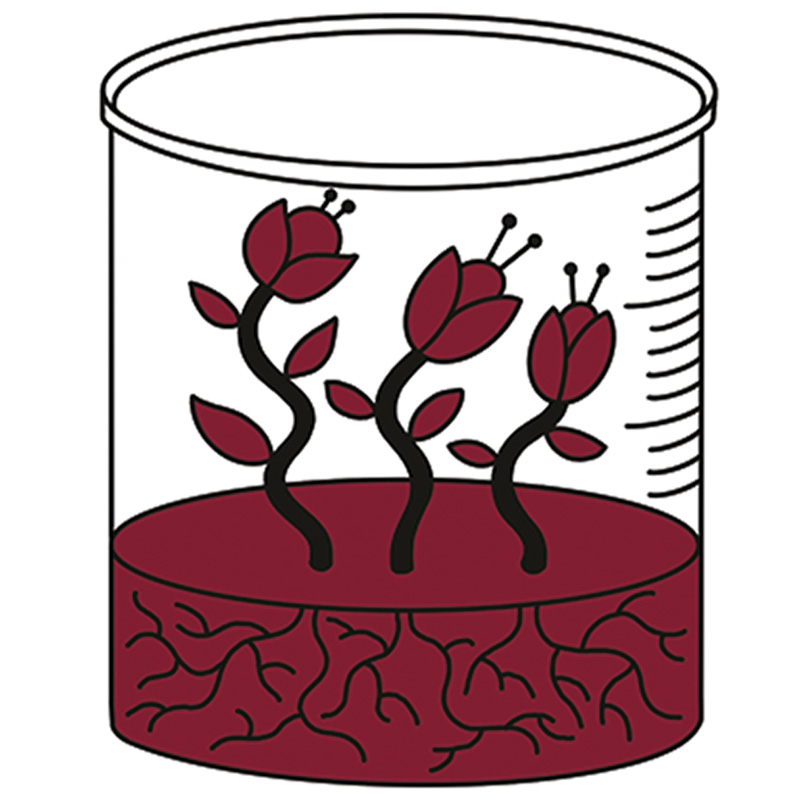
“Each cell is a square meter, allowing us the unique opportunity to grow substantial ecosystems and run quick experiments year-round,” says Elliott, assistant professor of civil and environmental engineering. The state-of-the-art lab also features scientific instruments like anemometers (devices that measure wind speed and airflow), a wide array of organic matter and amendments, and $40,000 worth of grow lights donated by Sollum Technologies. “It’s a really special setup, and there aren’t many comparable labs,” Elliott ’11 adds.
With this equipment and more at their disposal, students can optimize plant productivity and sustainability while pursuing a wide scope of research questions, Elliott explains. “Ultimately the goal is to learn more about ecosystems and how we can become better stewards of Earth,” he says. “Plants are intrinsically interdisciplinary, and there are so many potential applications— from environmental studies to food justice—and so many different ideas students can test and learn from in there.”
Students can take advantage of the lab through several avenues. Elliot’s ES 101: Introduction to Engineering Design course, for example, utilizes the facility for a class experiment growing basil in desert-like conditions. Others conduct independent research as EXCEL Scholars, through independent study, or for honors theses. Students can also volunteer in the lab.
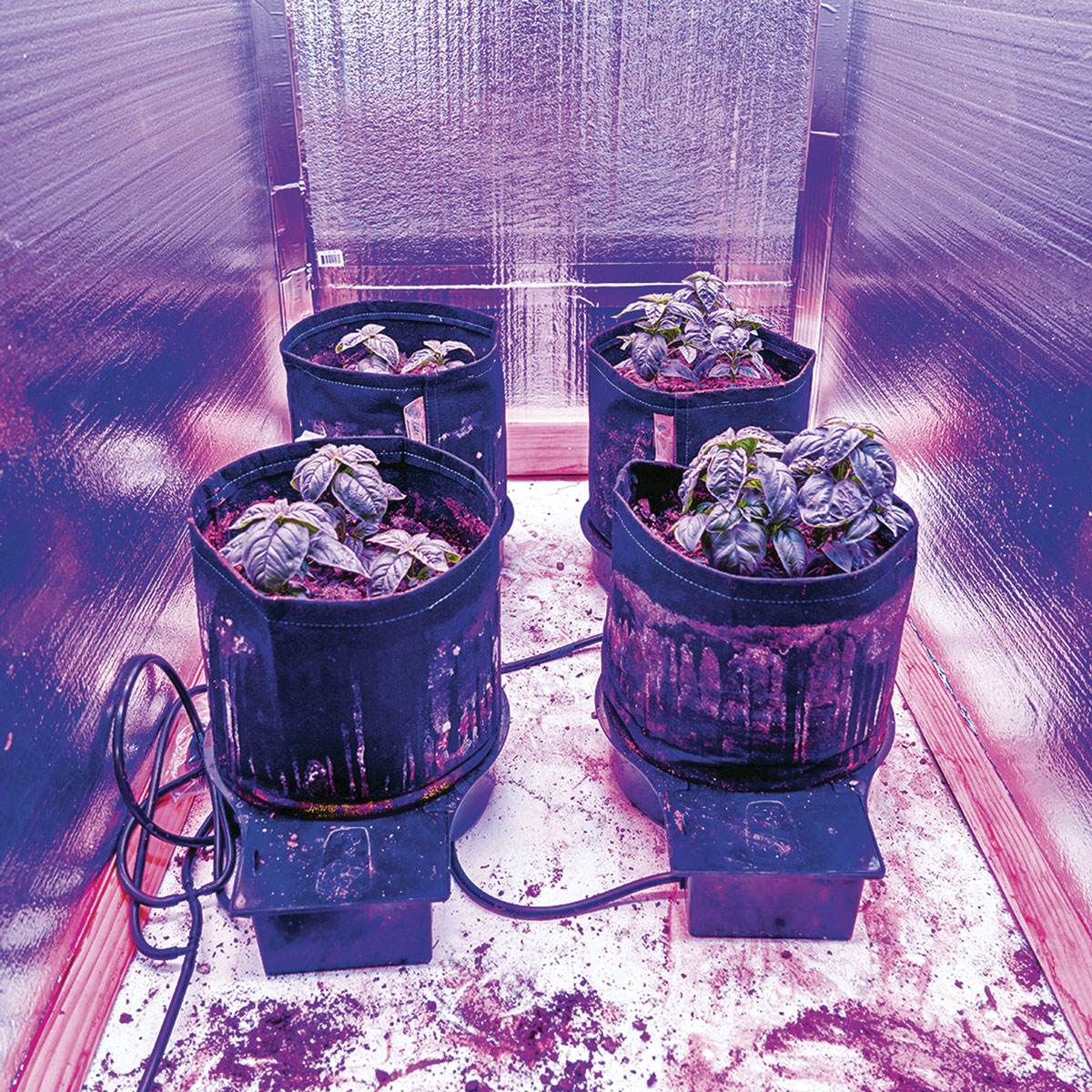
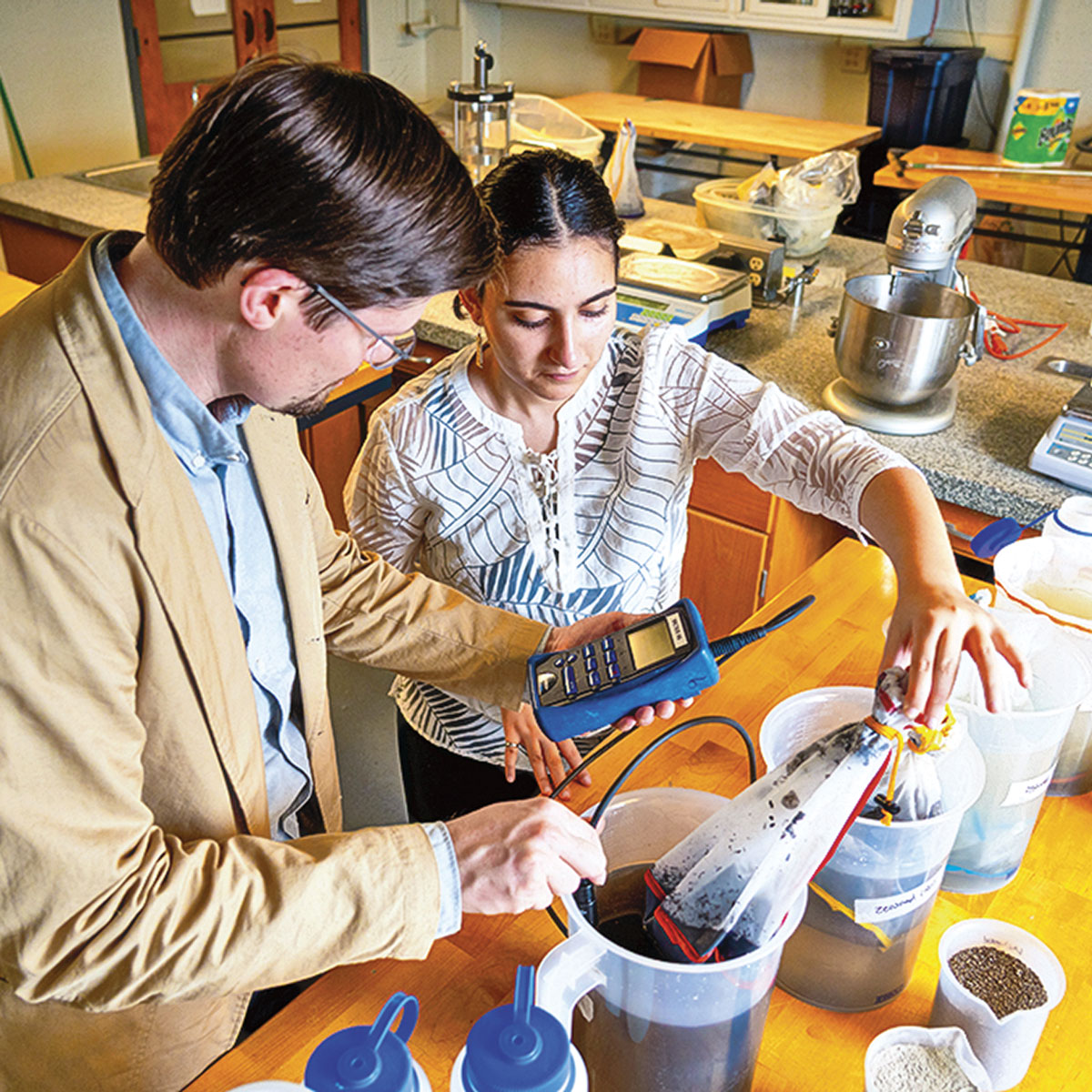
For his honors thesis, civil and environmental engineering major Eli Byrnes ’26 (pictured above, right) spent a year comparing living soil systems with hydroponic systems to grow nutrient-rich basil indoors. “I determined the living soil system was way more sustainable,” Byrnes says, “which is important in a world where water and energy are such critical resources that we need to conserve.”
Working with Michael Bertucci, associate professor of chemistry, Byrnes found that the basil grown in the living soil system contained less nitrate—a chemical compound that occurs naturally, but can pose health risks when consumed in high levels. The Biology Department also provided Byrnes access to its autoclave, allowing him to analyze how varying amounts of living organisms in soil affect basil growth. This relationship-building across disciplines, Elliott says, is what makes operating this lab at Lafayette especially valuable.
“All the departments and professors across the College have been so generous with their time and equipment to help us explore new facets of our research,” Elliott says. “A huge strength of Lafayette is this collaborative culture and institutional support for interdisciplinary work.”
Byrnes says the opportunity to work with people outside of his discipline strengthened his project and opened up bigger scientific questions.
The freedom to design, build, and conduct a truly independent experiment in the lab was a hands-on experience like no other, he adds. “This wasn’t like any lab I had taken at Lafayette. It was one where the end goal was something I determined,” Byrnes says. “Prof. Elliott was very clear that at the end of the day, this was my project, and he would be there to help me with whatever I wanted to do.”
That experience, he adds, has already paid off. “Just the fact that Lafayette as an undergraduate school provides these resources to students to do research to this degree is very rare,” says Byrnes, who is joining Greenman-Pedersen, Inc. as a water resources engineer in August. “Talking about this project during interviews and how it translates into the real world has proven invaluable.”
Elliott hopes the Lab of the Total Ecosystem will continue inspiring future generations of engineers. “I hope it helps students build an understanding and appreciation for all the services that ecosystems provide, but also get comfortable with approaching complex and structured problems through experimentation,” he says. Hands-on research, he adds, offers a different kind of learning from the classroom. “I want students to find something they’re curious about, and use that intellectual curiosity as motivation to learn deeply and continue cracking questions about the unknown.”