‘Street’ smarts
Through Lafayette’s Investment Club, students prepare for Wall Street careers by learning to buy and sell stocks with real money.

ILLUSTRATIONS BY FRANZISKA BARCZYK
On a recent Friday afternoon, Hasnat Aslam ’27 stepped to the front of a lecture hall in Simon Center for Economics and Business with a pitch: Buy Uber.
Facing him were several dozen members of the student-run Lafayette Investment Club, munching on pizza as they sat ready to analyze the fundamentals of his proposition. “Uber’s share price has taken a beating because of the rise of autonomous vehicles,” Aslam began, standing next to his pitch partner, Lorenzo Marsili ’27. “People are thinking that these ride-share companies are going to get substituted onto platforms like Waymo and Tesla.”
But that thinking is wrong, he continued. Uber’s significant first-mover advantage in the ride-share industry ensured it had a big enough moat to stave off competitors. “While we might not know yet who will win the AV wars, they’ll want access to Uber’s platform in order to gain access to customers,” he said. After he and Marsili finished their pitch, the room erupted in questions: Why would we bet on Uber over massive companies such as Google? What role did ancillary businesses such as Uber Eats play in their predictions for success?
Aslam and Marsili firmly responded to the concerns. In fact, Uber was already heavily investing in its own AVs through partnerships with companies such as Lucid and Rivian, they reasoned. And its logistics and delivery services were already providing more revenue than ride sharing. “There are a lot of underappreciated components of the business that are going to lead to future profits,” Aslam concluded. After the discussion, students proceeded to a vote, scanning one of two QR codes projected on the screens in the front of the room to indicate a “Yes” or “No” vote on the sale.
When all the votes were tallied, Aslam and Marsili carried the day, with a commitment of $20,000 from the club to invest in Uber stock.
The students celebrated as they made their way back to their seats, another real-world stock trade to add to Lafayette’s growing portfolio. This fall, Aslam and Marsili will become co-presidents of the club, which offers a unique opportunity for students to make hands-on investment decisions with real money as they add to a portfolio that’s grown for 80 years. “The first time I made a pitch, it was definitely nerve-wracking, because you want to get it right,” Marsili says now. “But now that we’ve been doing it for a few years, it’s more fun than anything else—just to be able to give a good pitch, explain your reasoning, and engage in good intellectual back-and-forth.”

“When you go to the gym, you need six months before you see muscles developing,” Aslam says, “but markets tell you immediately whether you are right or wrong. It really allows you to put your perspectives to the test.”
Founded in 1946, the Lafayette Investment Club is the oldest extant student investment club in the country, growing from an initial seed of $3,000. “What I usually say to people is we’re the oldest club in the country, therefore we’re the weirdest,” jokes faculty adviser Michael Kelly, associate professor of economics. Investment clubs at other institutions are often tightly controlled, tied to a particular class in which students compete to make the most money through investments, or overseen by professors or MBA students. By contrast, Lafayette is entirely run by undergraduate students, who make all of the investment decisions.
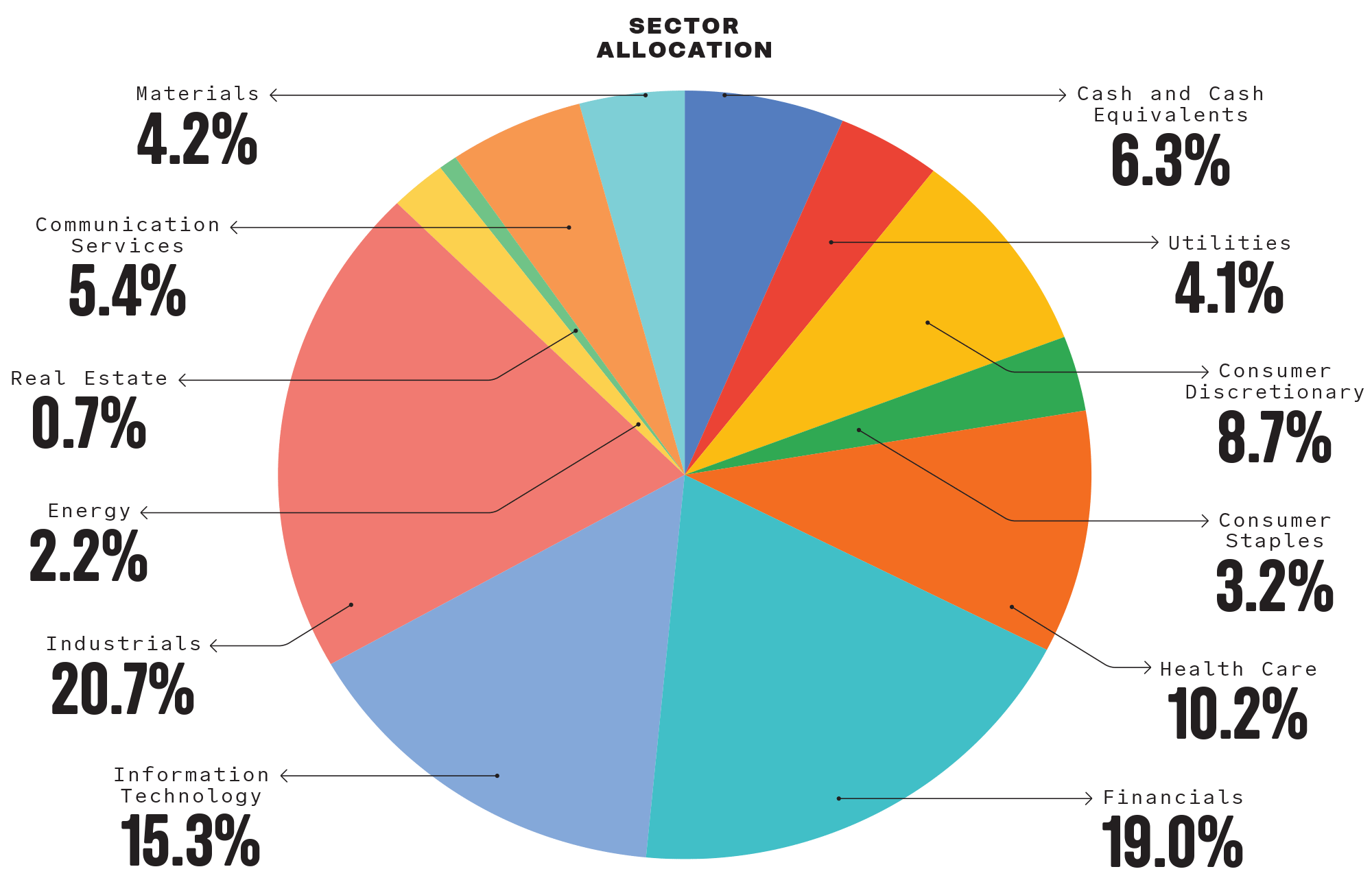
Kelly follows a tradition, laid down from the beginning of the club, not to override student decisions, but rather to let them sink or swim on their own. “My role is to sit in the back of the room and make sure they don’t break the law,” Kelly says. It’s a formula that’s worked surprisingly well, as the club’s assets under management have grown to over $1.6 million. Unlike those competitive clubs encouraging wild bets, Lafeyette’s club favors a balanced portfolio grown slowly over time (see “Asset Tracker” infographic from August 2026, below). “Students take it extremely seriously,” Kelly says.
The membership of more than 150 students learn how to analyze companies and build financial models as they take turns making pitches to buy and sell stocks in a portfolio that now encompasses about 60 stocks, divided among tech, healthcare, financial, consumer, and industrial categories. The hands-on experience they gain from the experience is crucial to giving them a leg-up in interviews with Wall Street financial firms as they chart their future. “If they go into finance, they probably won’t be in charge of a portfolio again until they’re at least 15 years into their careers,” Kelly says. “This is their chance to be making the decisions.”
A solid record
The history of Lafayette Investment Club goes back to the end of World War II, when an officer named Maj. John H. Tarbell was assigned to teach GIs about finance at American Army University in Biarritz, France, to aid in their transition to a peacetime career. Tarbell was a distinguished economist, having studied at Syracuse, Cornell, and Princeton, and taught at University of Illinois; in the 1930s, he’d been among those helping to write the law to establish the U.S. Securities and Exchange Commission. Now, a group of his soldier-students asked for help investing in the stock market, passing the hat to raise $3,000 in seed money—equivalent to about $50,000 today.
By the time they gathered the cash, however, they were sent home, back to the States. They asked Tarbell to use the funds to create a laboratory where he could “play with” the money, as he later said, and send them tips for their own investments. He took the money back to University of Illinois, but a surge in post-war admissions left him without housing. Seeing an opportunity, the dean of students at Lafayette, Frank Hunt, invited Tarbell to teach in Easton as part of a group of new hires in the economics department.
True to his word, Tarbell created the Lafayette Veterans Research Investment Foundation, purchasing his first stock through the fund in September 1946. As he made more investments, he tracked the progress and diligently reported results back to the group of veterans who had provided the initial funds. By the time he retired 20 years later, the $3,000 had grown to $90,000. At that point, he donated some of the money to causes including Massachusetts Institute of Technology, University of Rhode Island, and the Guggenheim Museum—but the rest sat untouched until 1972, when he donated it to Lafayette for an investment fund to be run by students.
The new investment club chugged along for a number of years with low attendance, until a new faculty adviser, Donald Chambers, now professor emeritus of finance, came up with an idea to offer pizza at every meeting, and attendance surged. By 1995, the fund had $103,000 in assets under management, including blue chips such as Coca-Cola, Dow Chemical, and Ford Motor, as well as burgeoning tech stocks including AOL and Dell Computer. With the growing dot-com boom, the portfolio rocketed to $126,000 the following year, when The New York Times reported on the club. “Not bad for neophytes,” the paper said, noting students were weighing whether to buy shares in Apple Computer. (Eventually, the club did, seeing its value grow by 10 times since first purchasing it.) From there, the fund climbed steadily, clearing $500,000 by 2016 and $1 million by 2021, before rising to its current level of around $1,625,000.
Asset Tracker
Lafayette’s student-run Investment Club prioritizes having a well-rounded portfolio.
The club now meets for lunchtime—still being served pizza—every Friday. They start with a general overview of the market led by three or four junior members of the club, tracking earnings reports, federal reserve decisions, world events, and other factors that might impact major indexes. Afterward, a senior member might give an educational presentation on a particular financial concept, such as venture capital or initial public offerings, or an alumni guest speaker might talk about their work. That’s followed by the main event: pitches to buy or sell stocks, led by members of the executive committee, with all members in good standing having the opportunity to vote.
In addition to being educational, the club is rewarding for students who get quick feedback on their investing acumen. “When you go to the gym, you need like six months before you see muscles developing,” Aslam says, “but markets tell you immediately whether you are right or wrong. It really allows you to put your perspectives to the test.” Despite the fact that students are risking real money, the club has safeguards in place to ensure no one investment will be too large, limiting any one buy to 3% of the total portfolio. The average buy-or-sell decision now is about $15,000 to $20,000.
Even so, there have been some big wins in the club’s past. One of the best was a little-known company called Intuitive Surgical, which makes laparoscopic surgery equipment and went public in 2000 for $2 a share. “When they voted on it, I said, ‘Oh my, this company looks wildly overvalued,’” Kelly remembers. The company became a “category killer” based on the widespread adoption of its technology, shooting up to $350 a share over the next two decades. “It became one of the best positions in the portfolio.”
More recently, the club bought security company Palantir back in 2024 when it was trading for $30, and sold it just over a year later at the top of its rise at $180, a 500% gain. Similarly, the club sold half its stake in NVIDIA last fall, earning a profit of $67,000 just before the price took a tumble. Despite those big bets, most of the club’s purchases over the years have been slow-and-steady long-term investments. “They are good about not being faddish,” Kelly says. The largest position in the portfolio is currently heavy-equipment maker Caterpillar, which has grown by 250% since purchase, to $113,000. “It gets them thinking about different stocks, not just following trends.”
“What they’re doing is managing risk to create return—that’s something you do with your hands, not your head.”

Of course, there have been some missteps along the way as well. Past president Blago Baychev ’12 remembers a particularly ill-timed investment in a wind company that dropped in price just after purchase. “It didn’t go well,” deadpans Baychev, who now runs a hedge fund in Florida. Even so, he argues, regardless of how a stock performs well, the practical experience of researching and defending an investment decision is priceless. “These are your first pitches—you can’t possibly claim any skill. But what sticks with you is the research you did, how you dive into the materials and filings, reading about the company and the competition, and the market.”
As an international student from Bulgaria, Baychev was initially mystified by the American financial system, coming to Lafayette right after the turmoil of the 2008 financial crash. “I was trying to figure out this thing Americans called ‘Wall Street,’” he remembers. Curious about the Investment Club, he discovered an open community of students who were eager to share. “It was a very collegial, team-based environment where students were not afraid to ask questions and share experiences,” says Baychev, who threw himself into the club, becoming president both junior and senior year—the club’s only two-time president—so much so that he jokes now that he majored in math and economics with a specialization in investment club.
An emphasis on mentoring new students is part of the spirit of the club. Outside of any competition over individual trades, students pride themselves on introducing new recruits to the arcane language of finance. “It was definitely a little intimidating at first, because a lot of the topics we talk about aren’t taught in high school,” says recent co-president Kathryn Duane ’26. “But the more I went to meetings and heard certain phrases repeated, I was able to fill in the pieces—it’s a practice-makes-perfect kind of thing.” Nervous to present at first, she took courage from more senior members who presented alongside her. “It’s easier to have confidence when you have other people by your side supporting you. It makes a big difference,” she says. Many of the students who are mentoring students now as juniors or seniors were not so long ago on the receiving end of tutelage, Kelly says. “It’s become part of the DNA of the club. Someone did this for me, so I have to make sure to do that for others.”
Preparing for Wall Street
Despite the longevity of the club, there have been some changes made over the years. Debates over divesting from fossil fuel companies and other controversial stocks, for example, led to rules within the last decade around Environmental Social Governance (ESG) requirements. While no stocks were banned outright, an ESG rating is now considered as part of the overall decision on whether to invest in a particular stock. That factor was put to the test recently, when a student pitched buying tobacco company Philip Morris. “It ended up being a heated conversation, and eventually didn’t get passed,” Duane remembers. “It’s one example of something that might be good for the portfolio in terms of making money, but might not align ethically or morally with club members.”
MARKET MOVERS
Since Lafayette students began investing the fund, they’ve had to navigate the unpredictability of the stock market. Here are major fluctuations from the past 50 years.
1970s
“Stagflation” with high inflation, high unemployment, and slow economic growth.
1987
“Black Monday” when Dow Jones dropped 22.6% on Oct. 19.
1997-2000
Dot-Com bubble (and bust).
1998
Long-Term Capital Management crisis.
2001
Sept. 11 terrorist attacks and temporary shutdown of markets.
2007-2009
Great Recession, the worst downturn since the Great Depression.
2010
“Flash Crash,” a $1 trillion stock market crash that lasted about a half-hour.
2020
COVID crash, which would later recover.
2026
AI disruption.
Duane and co-president Valdemar Kofod-Olsen ’26 also instituted some changes to bring more structure to the club, taking attendance at the beginning of each meeting and only allowing students who have attended at least 50% of past meetings in any given year to vote. As incoming co-presidents, Aslam and Marsili are currently working to formalize the mentoring aspect, voluntarily assigning senior members to specific junior members according to their interests.
Throughout its history, the club has complemented finance classes at the school, says Kelly, who notes that students generally aren’t able to take his investment course, ECON 321, until their junior year, after they’ve taken introductory economics courses. “For many students, the club is their first introduction to finance, way before they get to me,” he says. Moreover, the hands-on nature of the club provides a different experience than the investment terminology and portfolio theory they learn in the classroom. “What they’re doing is managing risk to create return—that’s something you do with your hands, not your head. They get to think it through and then do it with real money.”
In addition to practical skills, the club also helps its members develop soft skills such as public speaking and leadership, essential to later success. Baychev remembers being club president as his first experience managing a large group of people—having to track everything from coordinating financial presentations to ordering pizza for meetings. “From a leadership perspective, it’s very similar to what I do now,” he says, “communicating with my team about what we need to do on a day-to-day basis, organizing everybody and making sure they are enabled for what they are expected to do.”
Importantly, students also learn how to deal with disappointment and rejection, Kelly says, when their pitches are voted down. “Do they walk away at that point, or do they turn around and ask, ‘What can I learn from this?’” he says. “Those life lessons are better to learn during college when the cost of failure is smaller than when you are out in the world.” For Aslam, the most important thing he learned is how to better communicate about financial information. When he was first giving pitches, he says, he was talking about deltas and price-to-earnings ratios rather than focusing on the fundamental story behind a stock. “You have to read the room,” he says. “Learning to break down my thinking into something simpler made me realize I was initially using jargon to cover a lack of understanding. You have to really think it through.”
Those early experiences have become more crucial, says Kelly, as financial firms recruit earlier and earlier in the academic process. While once firms recruited at the end of senior year, now they recruit for junior internships by sophomore year, or even the end of a student’s first year. The club helps the process—a panel of alums from NYC come in every year to provide advice on applications and interviews—and is a unique experience to talk about in interviews, giving them an edge on candidates from bigger schools. “They have essentially made these kinds of portfolio decisions that many of their peers, when they go out into the world, will not have made.”
David MacKnight ’94, who was recently appointed to Lafayette College’s Board of Trustees, served as a past president of the club and remembers presentations by alumni guest speakers as being crucial to his breaking into finance. “It can be a very difficult business to break into, and having people come to campus and talk about what they did and how they got there was incredibly interesting—because everybody got there a different way,” says MacKnight, whose two job offers after college were facilitated through Lafayette alumni connections. After earning an MBA at Cal Berkeley, he joined a Wall Street fund called Mason Capital, helping build it from $60 million to $10 billion before leaving in 2015 to start his own hedge fund, One Fin Capital, with approximately $500 million currently under management.
Despite operating on a much larger playing field now, MacKnight hasn’t forgotten where he started from, and where he first learned to make investment decisions. When Lafayette revealed its newly renovated Simon Center for Business and Economics two years ago, MacKnight and his wife, Kristin, donated funds to establish a lab with state-of-the-art Bloomberg business terminals. (These terminals were supported by M. Alden “Al” ’60, P’84,’87,’90, G’15,’16,’18 and his wife Dorothy “Doll” Siegel P’84,’87,’90, G’15,’16,’18.) The lab has allowed students to incorporate detailed data for economic forecasting and profitability into pitches.
In a nod to both his own humble beginnings and those of the Lafayette Investment Club itself, MacKnight named it: J.H. Tarbell Lab.