Prepping for Paris
The collection of Lafayette artifacts recently loaned to the National Archives of France is ready for the world to see.
by amy downey
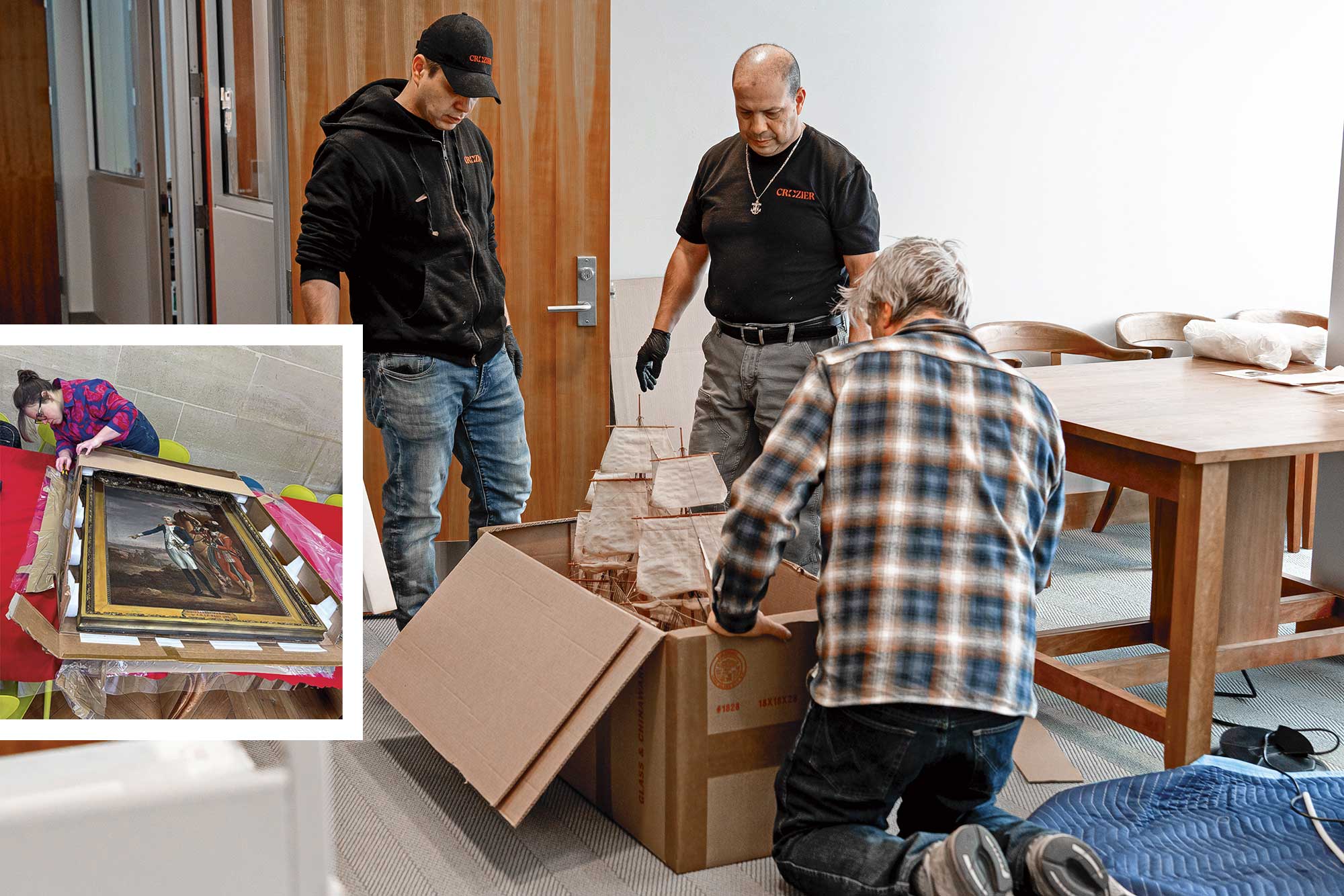
Photograph by Jaquan Alston; Inset photograph by Elaine Stomber ’89 P’17 P’21
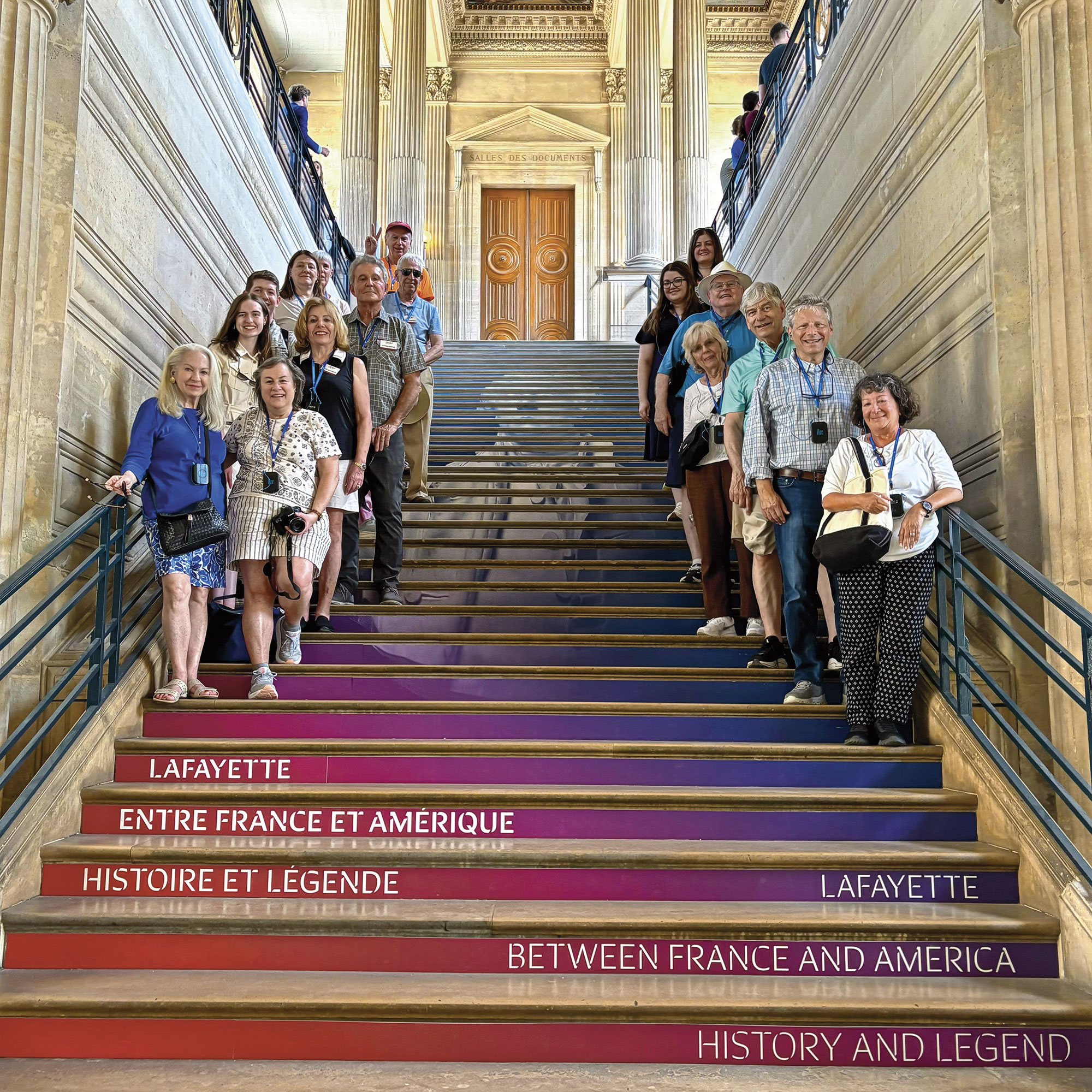
Nearly three years ago, Olga Anna Duhl, Oliver Edwin Williams Professor of Languages, sent a proposal for an exhibit to the National Archives of France. Lafayette between France and America: History and Legend would show the many sides of the “hero of two worlds,” particularly during his time in America. While the Libraries had smaller domestic loans in the past, this would become the biggest and most involved loan to date. When it was approved, co-directors of Special Collections and College Archives, Elaine Stomber ’89, P’17,’21 and Ana Ramirez Luhrs, began coordinating details with Duhl and staff.
“Once we got the go-ahead, those of us who work in Special Collections began identifying which objects would support the exhibition,” Stomber says, “We worked with the team at the National Archives in Paris to determine how exactly the exhibition would be laid out, and gave suggestions for other items that might be borrowed from French collections.”
The exhibit, displayed in both French and English, will be free to the public. The installation includes more than 50 College pieces (letters to George Washington, paintings, Farewell Tour memorabilia), plus 60-some items sourced from Versailles to La Grange, Lafayette’s home.
A few days ahead of the exhibit opening on April 1, Stomber and other colleagues were on-site to check out the installation; likewise, they’ll head back to the museum before the exhibit wraps up on Bastille Day to help develop the deinstallation plan. But before the campus collection could touch down in Paris, it needed to be carefully packed up and shipped from Easton. Here’s more of how these treasured items left for the international stage.
1.
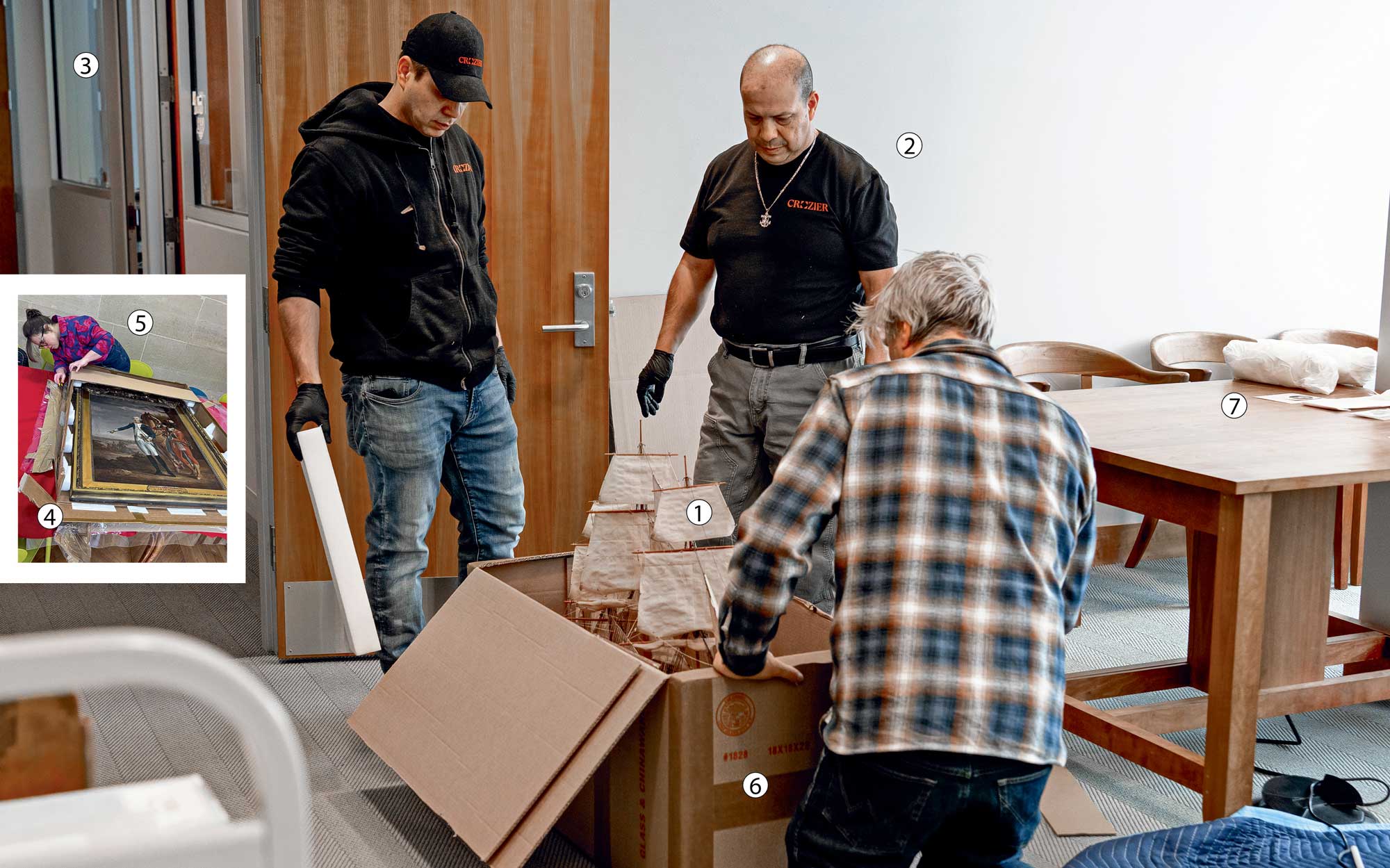
Hermione was the most complicated item to pack. Due to the delicate sails, a variety of foam supports were eventually built within a much larger crate so the ship wouldn’t shift.
2.
Packers from New York company Crozier Fine Arts were on-site in Special Collections and Archives for about two full days in December to complete the job. “Luckily for us, they just opened a Paris office last year,” says Stomber.
3.
Lafayette’s collection—typically stored in the College’s climate-controlled vault—was transported in custom Crozier trucks and facilities to maintain temperature and humidity.
4.
Updated appraisals were required for each object before they could be in transit.
5.
Materials will go through a condition reporting process four times: the moment they were packed in Easton; once they came out of the crates in Paris; when the exhibit closes in July; and after the items return to campus.
6.
A special flight took the collection from JFK to Charles de Gaulle, where Crozier processed items through international customs.
7.
Although dimensions and photographs of the items were sent to curators in advance, the installation couldn’t be built until all of the items had arrived and were physically assessed.