Photographs by Jaquan Alston; Illustration by Antonio Pinna
Anthropology of the city
Students in Prof. Matthew DeMaio’s course use Downtown Easton as a living, breathing classroom.
With their towering buildings and bustling streets, cities have long been a symbol of modern life and innovation, and a beacon of opportunity. But how do urban spaces shape the identity, daily life, and sense of community for those who live in them? How does big-town life influence culture, and vice versa? In Prof. Matthew DeMaio’s Anthropology of the City course, students take on the role of anthropologists to dig into these kinds of questions—using Downtown Easton as their main research subject.
“Cities are dynamic, and the people in them are so heterogeneous,” says DeMaio, assistant professor of anthropology, who has taught the course the last two semesters. “I provide my students with the means to open up their analytical eyes to the everyday, and to the contemporary methods anthropologists use to study cities—like interviews, observation, mapping, and archival work.”

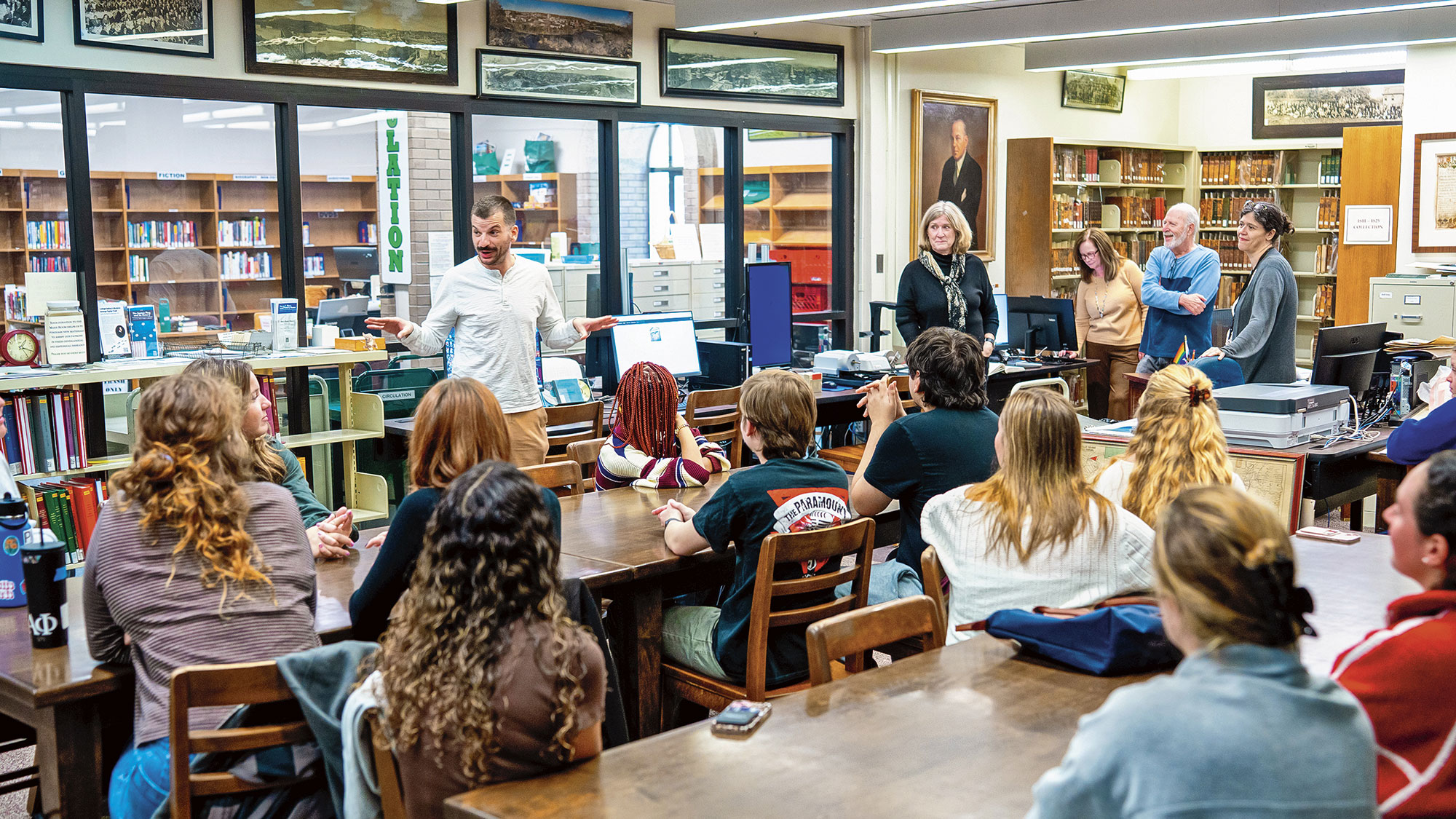
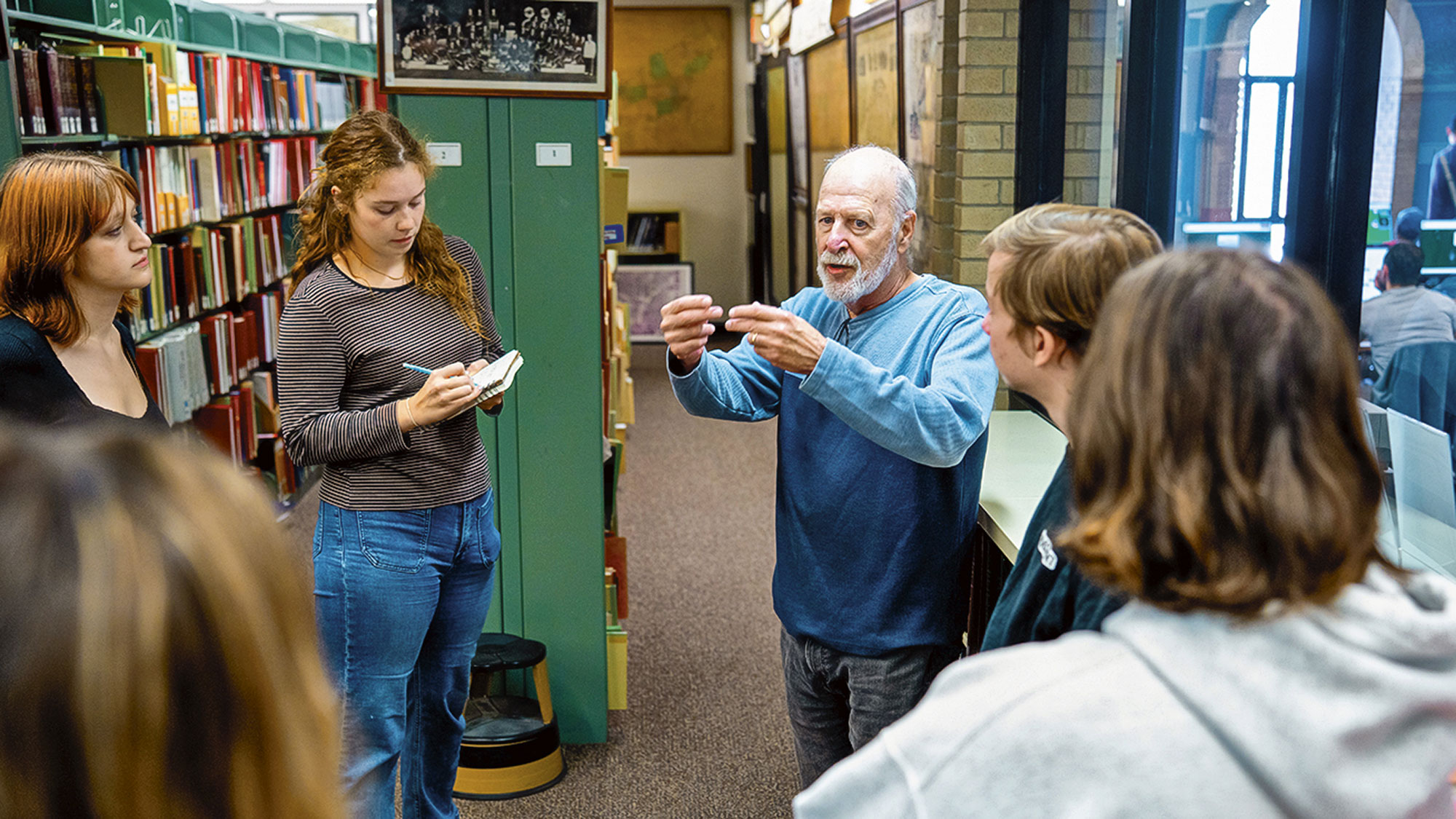
To do this, DeMaio (pictured speaking, above) engages his A&S 233 students with in-classroom readings, discussions, and workshops that challenge them to think like anthropologists. He also teaches them how to use tools of the trade such as ArcGIS StoryMaps, an online platform that utilizes maps, photos, video, and other digital media to bring stories to life.
But learning isn’t confined to the lecture hall: Anthropology of the City students also have the opportunity to step out of the College Hill neighborhood, walk in the footsteps of anthropologists, and explore not only the profession but also the historic city right in their backyard.
During this course, Easton becomes an educational playground; students gain hands-on experience through anthropological methods including field note writing, ethnographic observation, and gathering and interpreting data.
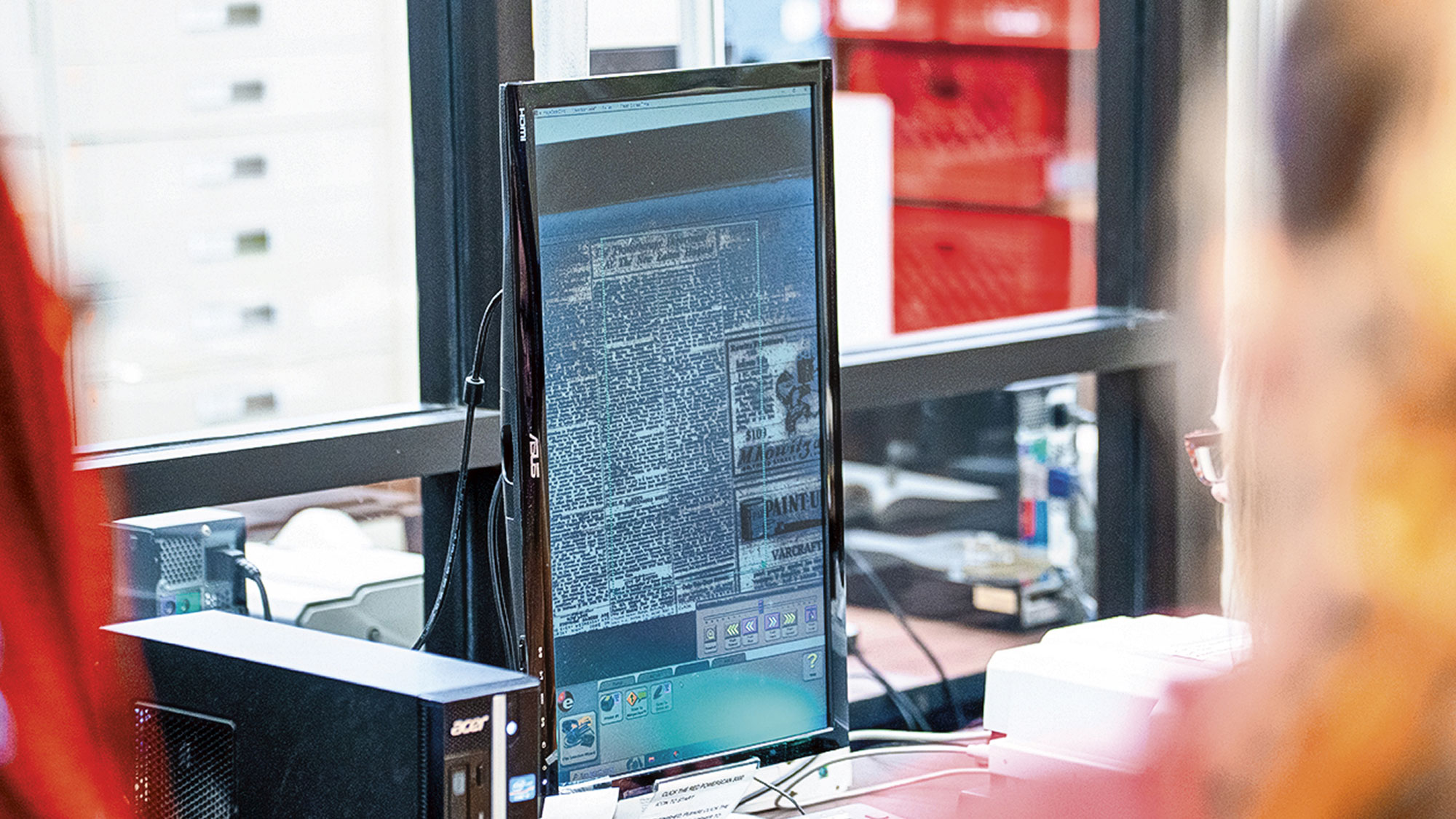
The class also takes a field trip to the Easton Area Public Library (EAPL) on Church Street, organized with the help of Ana Ramirez Luhrs, co-director of Special Collections and College Archives. While there, students are introduced to the local archives and plethora of resources available to them. Since 1811—years before the College was founded in 1826—the library has served the community as a hub for promoting literacy, advancing lifelong learning, and supporting active and informed citizens.
“Expanding beyond classroom walls shows students that anthropological work doesn’t have to be done halfway around the world—you can do it right here and see it with your own eyes,” DeMaio says. “It opens them up to a new perspective on the area where they live, which they might not know much about.”
Heather Reyes ’26, a double major in women’s, gender, and sexuality studies as well as anthropology and sociology, says exploring the city’s archives was the highlight of her experience when she took the course in spring 2025. “It made me feel connected to Easton’s community,” she says, adding that it also introduced her to archival research, which she didn’t have experience with before.
The EAPL trip kicks off the course’s final project, which calls on students to select a downtown space or building—such as the Easton Public Market, Crayola Factory, or Centre Square—and draw on training they gleaned from the course to delve into the story of the space’s past and present. “The project helped me gain analytical skills, and using ArcGIS to create and present taught me how to communicate research in a way that’s accessible and meaningful,” says Reyes, who chose the Easton Cemetery as her research topic. “I was able to view the cemetery not just as a burial site, but as a living archive that tells the story of the values of Easton community members, the change within the landscape, and more.”
She adds that the broadened perspective from the course will be useful to her in the future, as she hopes to do student advocacy work in higher education. “Because I aspire to work with students who come from different backgrounds, being able to think about cities in different ways and how they connect to people’s identities and sense of belonging will be critical to being able to interact with students and help them transition into college life,” Reyes says.
“Anthropology is a discipline that demands that students collect data by various means and analyze it through a range of complex, engaging, and difficult but enlightening theories and conceptual approaches, and then make arguments based on that data,” DeMaio adds. “That set of skills—thinking critically and making decisions—is useful whether you want to do anthropological work or not. And that’s what we do in this class.”