Driven for safety
Engineering psychologist Michael Nees talks about taking a human-centered mindset to avoid blind spots in design.
Photography by Rick Smith
Photography by Rick Smith
Every time he turns a doorknob, walks up a flight of stairs, or starts a car, psychology professor Michael Nees is assessing how well their designers might have anticipated human behavior. As an expert in human factors and engineering psychology, Nees understands the role of psychology in creating a “system”; in fact, it has the potential to influence every step of a user’s interaction with it.
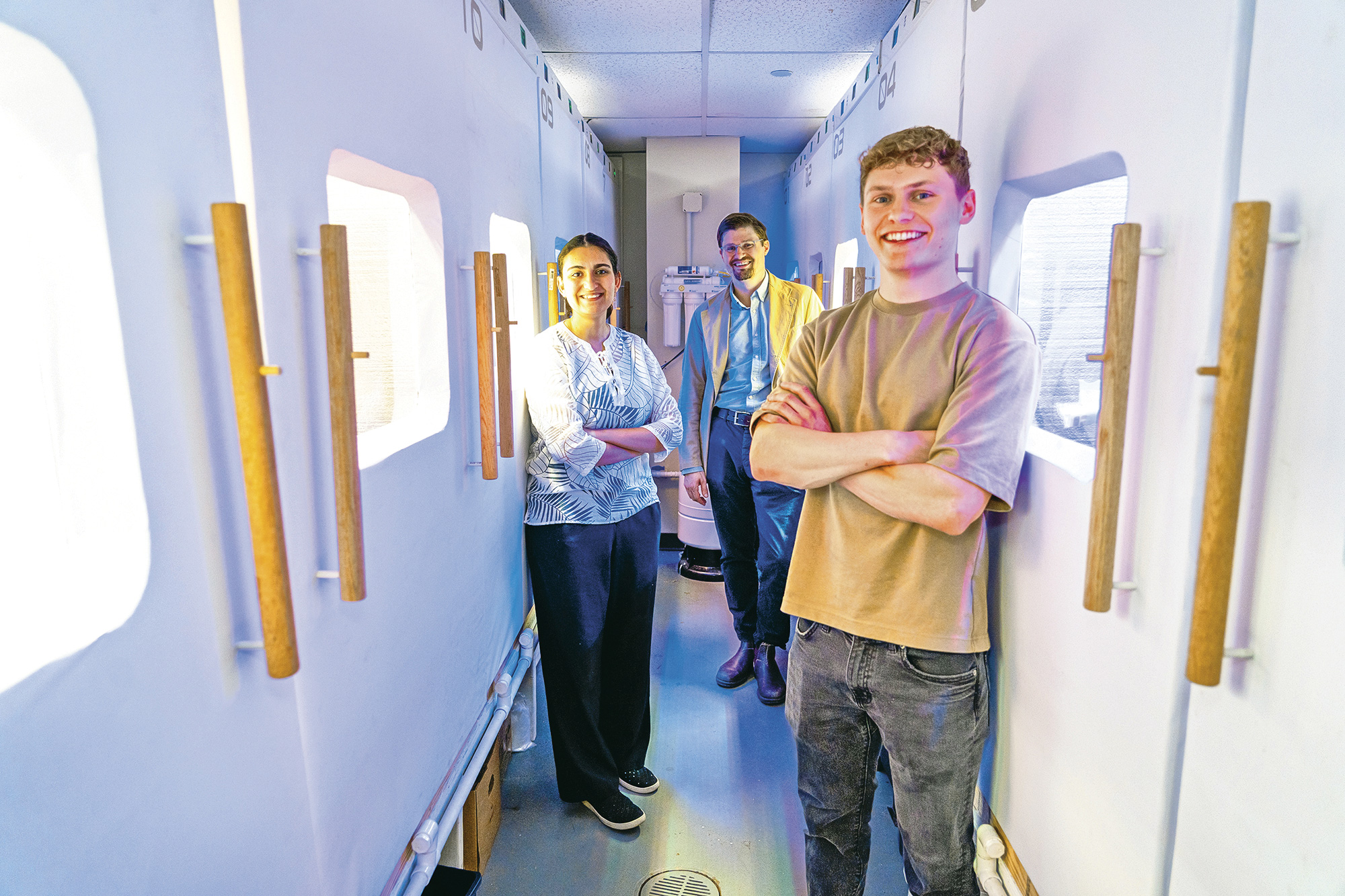
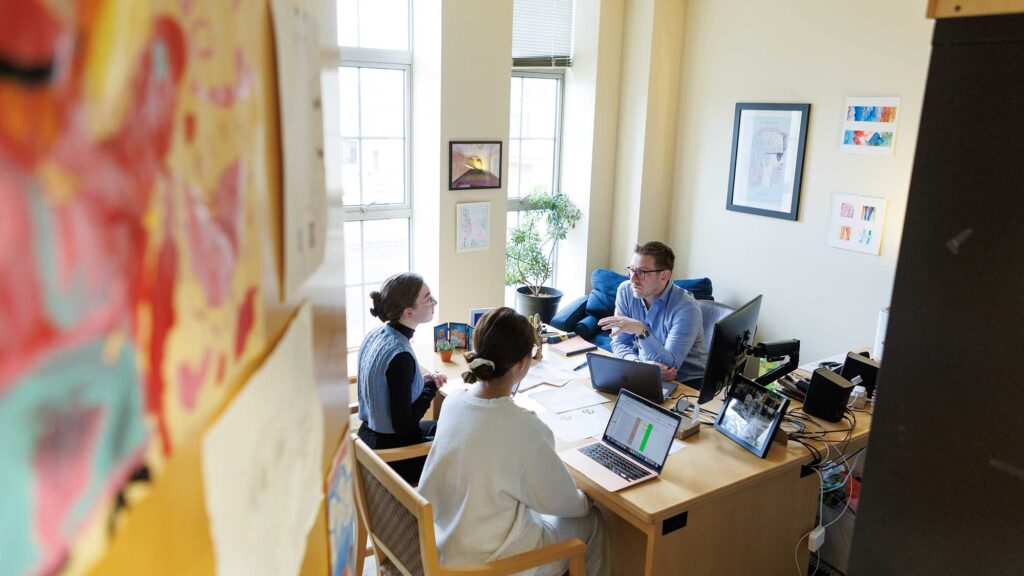
At Lafayette, Nees encourages students from both psychology and engineering backgrounds to take this human-centered approach to analyzing the world around them. In his Human Factors, Perception, and Cognition Lab, he and a team of students investigate how to maximize driver responsiveness and examine situations in which companies dismiss functional shortcomings as “user error.” Relatedly, his courses on human factors and technology explore how humans impact—and are impacted by—the many kinds of system design.
Nees’ research, coursework, and participation in interdisciplinary conferences like InCabin, an annual industry conference for automotive engineers in Detroit, demonstrate his drive to push for design decisions that maximize sensibility, accessibility, and safety in products.
This summer, you’ll be giving a workshop at the InCabin conference to address a recent comeback of buttons, knobs, and switches in vehicles as opposed to touchscreens. What differences have you been observing in the way people interact with these features?
The trend has been to cram touchscreens into every car, so things that used to have physical knobs are now buried three clicks into a touchscreen. Many drivers don’t like this, and it’s also not safe. Touchscreens keep your eyes off the road for much longer. With something like a knob, you can reach out and have some kind of muscle memory for where it is and receive that tactile feedback.
You’ve also presented about how vehicular auditory alerts, or the noises we hear in cars, are specifically designed to get our attention.
In the past 15 years, a lot of the way we build sounds into cars has been driven by what sorts of features automakers have been able to automate—these, in turn, warrant new pieces of information being presented to the driver. For example, once there were systems that could detect a forward collision was about to happen, we needed a sound to communicate this warning to drivers.
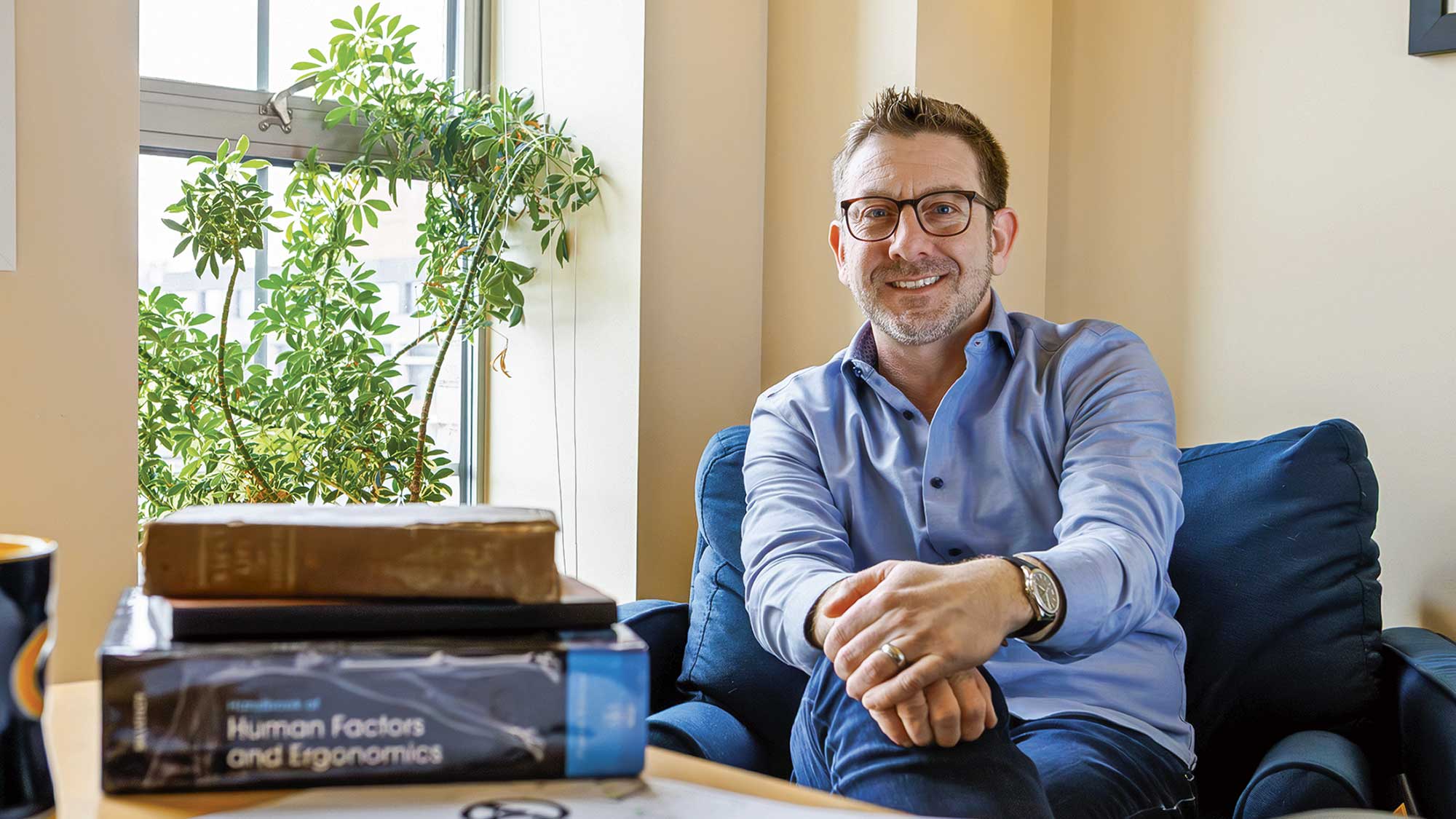
Nees says to ask questions like, “Who was this built for and who was this not built for, and why is it that way?”
With technology evolving so rapidly, are there any concerns with how these new features influence human behavior?
People start engaging in more risky behavior when you add automated safety features to cars like adaptive cruise control and automatic emergency braking. I did a study a few years ago where one person said they were more likely to eat foods that required a spoon once they had a car with adaptive cruise control and lane-centering steering. So we have to think about making the compromise between using the amazing technology we have that can prevent accidents, but also not putting it out there in a way we know humans will misuse it.
How should we tackle these instances where there seems to be a gap between what psychological research indicates regarding safety and what we are seeing on the market?
Part of going to conferences like InCabin is to engage with people from the automotive industry and present my research in a way that makes sense to them. There has been a culture of not taking this stuff seriously until something goes wrong. One of the quotes I use in my Human Factors class is by Ralf Speth, the former CEO of Jaguar Land Rover. He said, ‘If you think good design is expensive, you should look at the cost of bad design.’ But I do think there’s more awareness than there used to be at major tech companies and auto manufacturers of the importance of this all. They have people who are working on these problems, and the field’s in a much better spot than it was a couple generations ago.
What sort of projects are you working on in your 300-level lab course, Human Factors and Engineering Psychology?
It looks a lot different from a typical psychology lab. I’m trying to give students an experience that is very applied, so I teach different methods in engineering psychology that human factors specialists use out in the field. For the final group project, students choose any system and perform a holistic analysis in order to make various recommendations for how you could improve its design.
How does your capstone course, Disabilities and Assistive Technology, address the importance of engineering that accounts for all humans?
I encourage students to look at the world and engineering around them and ask questions like, ‘Who was this built for and who was it not built for, and why is it that way?’ When you start to ask these questions and think in this human-centered design mode, you notice a lot of stuff you didn’t notice before, especially if you’re one of those people for whom a lot of technology has historically been designed. I learn a lot from my students in these discussions, and I’m constantly being shown different ways to think about things from the personal experiences and perspectives they bring into class.